The Web of Life
Ten real ecosystems, simplified into food webs you can explore. Select any organism to see who it eats, who eats it, and who depends on it — then remove a bird and follow what might happen next.
The Tree-Line Pact
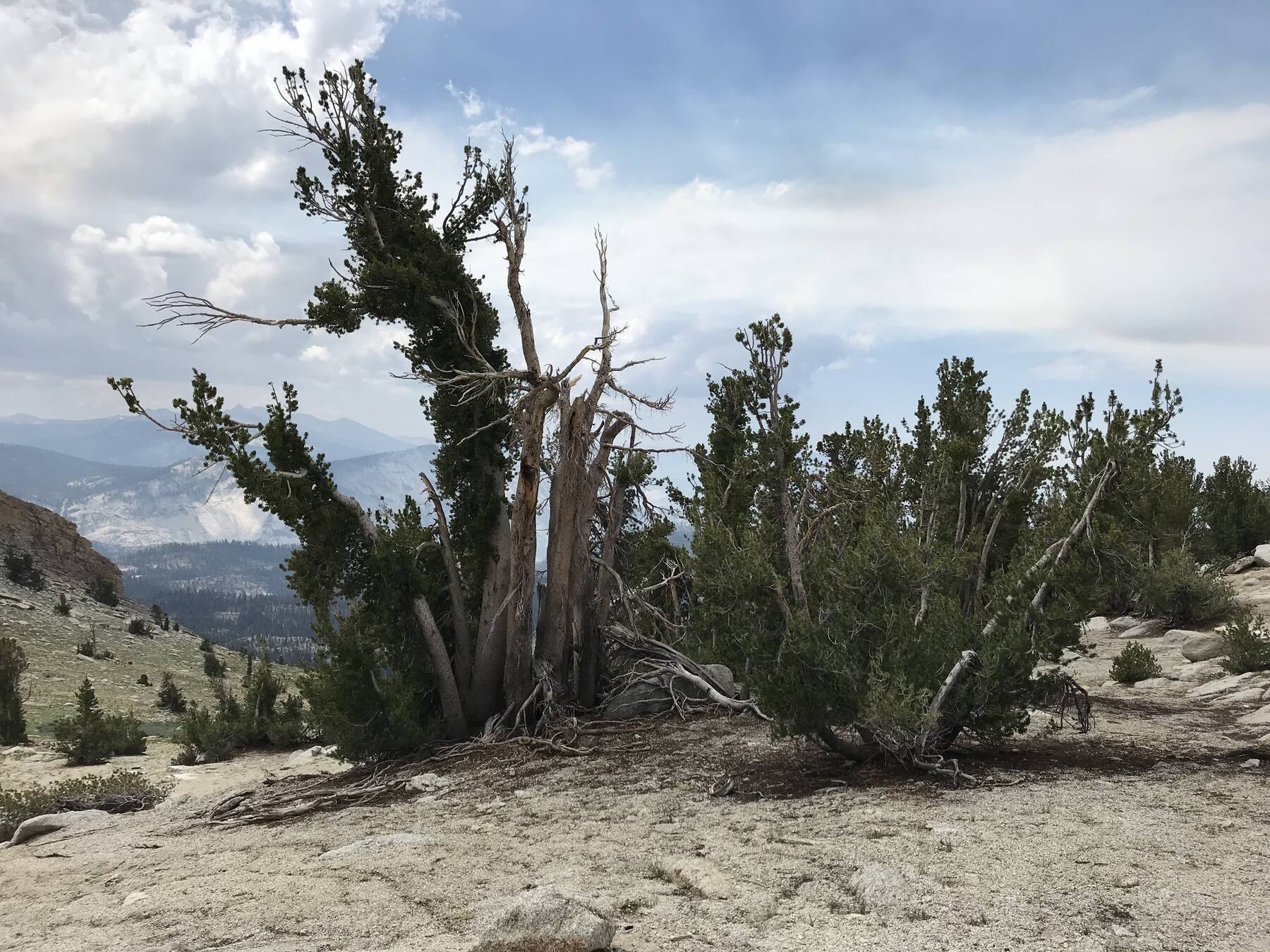
High in the Rockies, one bird and one tree have shaped each other. Whitebark pine cones never open on their own; Clark’s Nutcracker hacks them apart and buries the seeds — and the seeds it forgets become forest.
The Tree-Line Pact
High in the Rockies, one bird and one tree have shaped each other. Whitebark pine cones never open on their own; Clark’s Nutcracker hacks them apart and buries the seeds — and the seeds it forgets become forest.
Select any organism to see its relationships, or remove a bird above to see what might follow.
- Eats / feeds on
- Disperses seeds
- Competes with
- Harms / kills
- Supports / shapes
- Documented
- Likely
- Hypothesised
An educational model of documented relationships — not a population forecast. Real ecosystems contain many more species and links than shown.
A model, not a forecast
These webs show documented relationships, simplified so they can be read at a glance. Removing a bird shows which links break and which effects ecologists have recorded or proposed — it does not predict population numbers.
Observed or measured and published in the scientific literature.
Strongly supported inference from documented ecology, but not directly measured.
Plausible but untested, debated, or speculative.
Compensation
When a species disappears, others sometimes take over part of its role — another seed disperser, another predator. Compensation is rarely complete: replacements are usually fewer, smaller, or behave differently.
Cascades
Effects can ripple through several links — a lost predator lets prey increase, which changes the plants they eat. Each extra step adds uncertainty, which is why second-order effects are usually graded likely or hypothesised.
Complexity
Real ecosystems contain thousands of species and are shaped by climate, disease, fire and people. A missing link in these diagrams does not mean no relationship exists — only that it is not shown here.