One in eight of the world’s bird species is threatened with extinction, and nearly half have declining populations. Conservation works — several birds in this atlas exist today only because people intervened.
Figures: BirdLife International (2022), State of the World’s Birds.
VUVulnerable6in this atlas
ENEndangered3in this atlas
CRCritically Endangered5in this atlas
EWExtinct in the Wild1in this atlas
The IUCN Red List
Nine categories of risk
The IUCN Red List assesses each species against quantitative criteria — population size and decline, range size and fragmentation. Select a category to see what it means and which birds in the atlas it applies to. Every profile shows the year of its assessment.
CRCritically Endangered
Facing an extremely high risk of extinction in the wild (threatened).
Vulnerable, Endangered and Critically Endangered together form the “threatened” categories.
For a few very rare birds, almost every individual is known, so their history can be charted. We show only documented counts and published estimates — no interpolated or invented values.
Unit: breeding pairs / occupied nests (lower 48 US states). Source: U.S. Fish & Wildlife Service: 2007 delisting rule (Federal Register 72: 37346) and 2021 press release on the 2020 population update. Survey methods changed: 1963 and 2007 figures are compilations of known or estimated nesting pairs from state and Audubon surveys, whereas the 2019 figure comes from aerial surveys of high-density areas extrapolated with eBird relative-abundance data in an integrated population model. Part of the apparent increase reflects improved survey coverage.. Points are documented counts or estimates only; lines connect them for readability and do not show change between surveys.
Trapping for the illegal bird tradeIn recent decades, trapping for the live-bird trade pushed the species to extinction in the wild; the last three birds found in 1985–86 were captured for trade in 1987 and 1988.
Loss of caraibeira gallery woodlandMore than three centuries of settlement and exploitation along the São Francisco valley destroyed most of the riverside woodland the species needed, and grazing by goats and cattle continues to degrade the caatinga.
DiseasePsittacine circovirus, which causes beak and feather disease, was first detected in one bird in May 2025, and all 11 free-flying birds recaptured that November tested positive. ICMBio found that biosecurity protocols were not being followed and fined the facility.
Other historical pressuresThe spread of Africanized bees and the building of the Sobradinho hydroelectric dam may have contributed to the decline in the 1970s and 1980s.
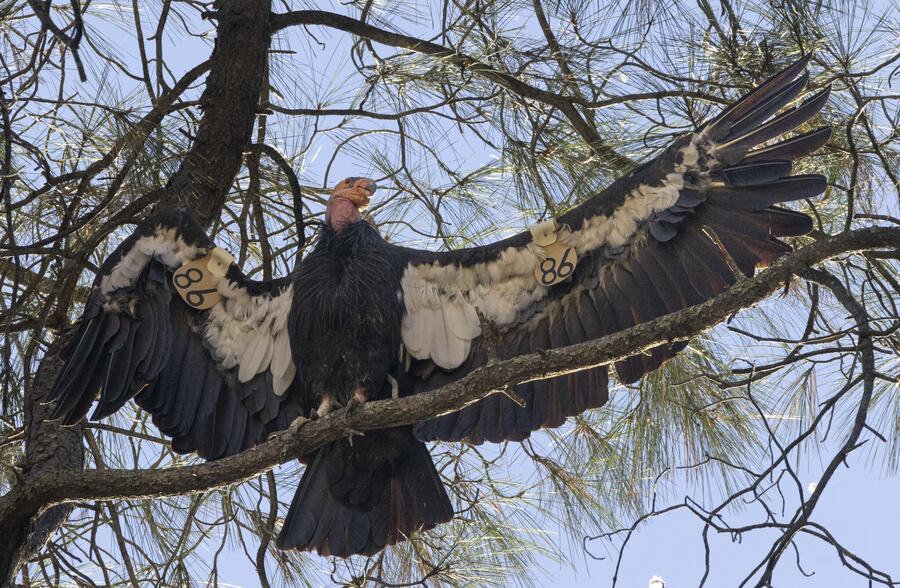
Lead poisoningCondors swallow lead bullet and shot fragments in carcasses. From 1992 to 2025 there were 161 confirmed lead-poisoning deaths in the free-flying population, which is 50% of the 324 deaths with a known cause (USFWS). Lead harms adult survival, which a slow-breeding species cannot afford.
Highly pathogenic avian influenzaIn 2023, 21 condors in the Arizona–Utah flock died in an HPAI outbreak. Vaccinated condors have been released since late 2023.
Shooting, power lines and other human causesShooting, collisions with and electrocution on power lines, other poisonings and wildfire (including the 2020 Dolan Fire in Big Sur) have also killed free-flying birds.
Dependence on managementGrowth in all wild flocks still relies on releasing captive-bred birds, because deaths outnumber wild-fledged young.
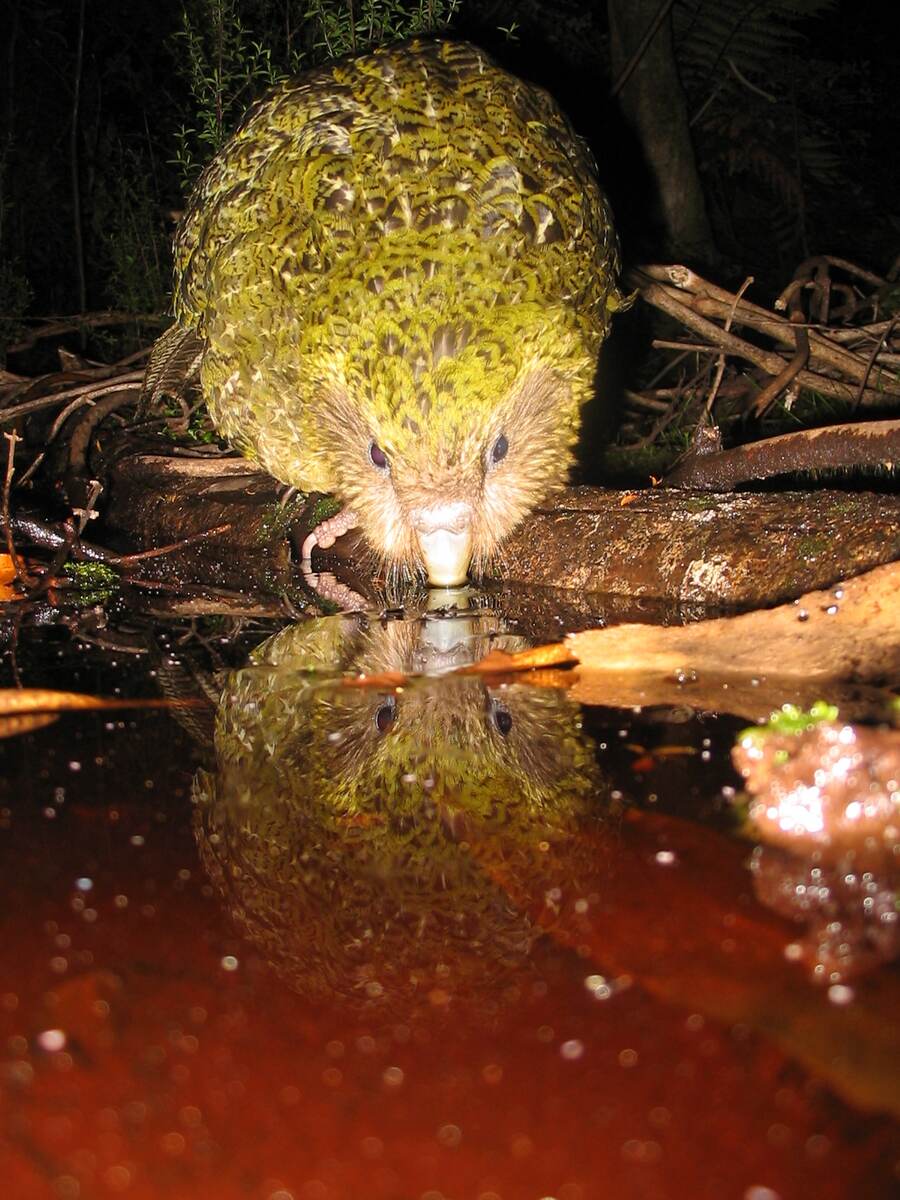
Introduced mammalian predatorsCats, stoats and rats caused the collapse of wild populations. They are absent from the current refuge islands, but any reinvasion would be a serious threat.
Infertility and low genetic diversityAbnormally low egg fertility and very low natural reproduction are major concerns. All living birds descend from a small number of founders, almost all from Stewart Island.
DiseaseIn 2004 three juveniles died of erysipelas, a bacterial infection not previously recorded in the species. Since 2002 at least 15 birds on Whenua Hou have been diagnosed with cloacitis. In 2024–25 DOC ran a vaccination trial against highly pathogenic avian influenza.
Infrequent breeding and limited habitatKākāpō breed only in mast years, and DOC counts just 13 breeding seasons since 1995. The population is confined to a few islands, which limits room for growth.
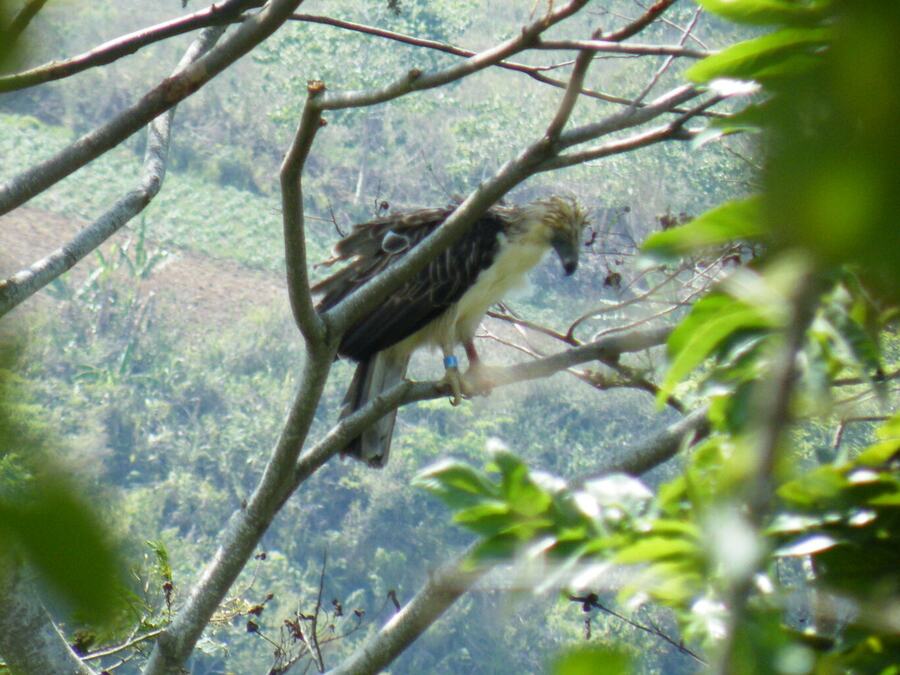
DeforestationClear-felling for timber through much of the 20th century and, from about the late 1980s, widespread swidden (slash-and-burn) agriculture removed most lowland forest. Forest cover in the Philippines fell from 34.9% of the land area in 1969 to 22.2% in 1987. Forest loss has slowed in the past 20 years but continues.
Shooting and persecutionHunting and persecution have reduced occupancy across much of the range. Forest clearance also opens up the remaining forest to hunters.
Very slow breedingA pair can raise at most one young every two years, and recruitment of young birds into the adult population currently appears very low.
Mining and severe weatherMining concessions and typhoons are more minor threats.
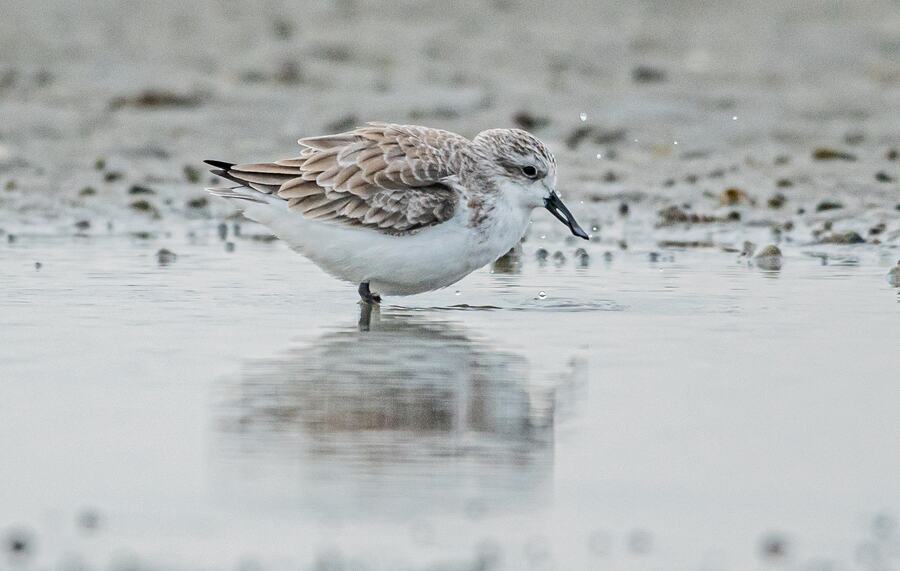
Loss of tidal flatsReclamation for industry, ports, aquaculture and agriculture has destroyed key mudflats along the flyway. At Saemangeum, South Korea, "hundreds" of Spoon-billed Sandpipers were recorded before reclamation in 2007, and only about one bird on average since. Invasive smooth cordgrass (Spartina alterniflora) makes Chinese mudflats unsuitable.
Trapping and huntingBirds are caught in nets set for larger shorebirds in Bangladesh, Myanmar, China and Viet Nam. In 2009–10, eight hunters on Sonadia Island, Bangladesh, said they had caught 22 Spoon-billed Sandpipers. Monofilament nets on the Chinese coast also kill shorebirds, and hunting in the Russian far north-east is larger than once thought.
Low breeding successNest predation, bad weather and disturbance keep productivity low on the breeding grounds.
Climate changeModels suggested that 57% of breeding habitat could be lost by 2070, and shrubs are already spreading into coastal tundra in the south of the range while the north is drying.
Veterinary diclofenacVultures that eat the carcasses of livestock treated with diclofenac suffer kidney failure and visceral gout. Indian road-transect counts fell by 99.9% between 1992 and 2007, with an average decline of 43.9% per year from 2000 to 2007 (Prakash et al. 2007). Illegal use of human diclofenac formulations on livestock continued after the 2006 ban.
Other vulture-toxic veterinary drugsKetoprofen, aceclofenac and nimesulide have also been found to be toxic to vultures and were recently banned in India. Meloxicam and tolfenamic acid are considered safe alternatives.
Food shortage and poisoning in South-East AsiaThe earlier disappearance from most of South-East Asia is attributed mainly to the collapse of large wild ungulate populations and changes in livestock husbandry that reduced carcass availability, plus accidental poisoning linked to local hunting and fishing practices.
Invasive plantsTraveller’s palm, strawberry guava, Ligustrum robustum and the liana Hiptage benghalensis have invaded much of the remaining forest, cutting hunting efficiency and gecko numbers.
Introduced predatorsBlack rats, crab-eating macaques, mongooses and feral cats prey on eggs, young or adults and make natural nest sites unsafe.
Shortage of nest sitesIn the west, where natural cavities are scarce or deteriorating, birds have been lost from areas without nest sites; nest boxes help but need maintaining.
Inbreeding and diseaseThe 1970s bottleneck caused an extreme loss of genetic variation. The species is very susceptible to trichomonosis and contracted adenovirus in captivity.
Climate changeMore wet days at the start of the breeding season are linked to later egg-laying.
Disturbance and development near coloniesIn Morocco, illegal building and disturbance close to the breeding cliffs, changes in farming on the feeding grounds and a proposed tourist development are considered the most severe threats.
Hunting and poachingHunting was the main threat to the Syrian birds, especially on migration through the Arabian Peninsula. Illegal shooting in Italy is a key threat to reintroduced migratory birds; poaching caused 18% of known-cause deaths in the European population in 2025.
Electrocution on power linesElectrocution caused 21% of known-cause deaths among reintroduced European birds in 2025 and probably killed tagged birds in Jordan; 182 high-risk pylons have been retrofitted in Austria.
PesticidesPoisoning by pesticides used against locusts and mosquitoes was a major historical threat in Türkiye.
Climate changeBirds from the Alpine colonies increasingly struggle to cross the Alps in autumn, prompting a shift of the human-led migration route towards Andalusia.
Power-line collisionsCollision with power lines is the most significant known cause of death or injury to fledged young; 45 collision deaths were recorded between 1956 and 2006. Line markers cut collisions by 50–80%, but most lines remain unmarked.
Energy development in the migration corridorWind farms, new power lines and oil and gas activity along the migration route reduce stopover habitat and add collision risk.
Drought and freshwater inflowsDrought lowers breeding success in Canada and reduces blue crabs and wolfberries in Texas; in 2008–09 it roughly doubled crane mortality. Reduced river inflows to the coast have similar effects.
Coastal development and sea-level riseHousing, chemical spills, sea-level rise and human disturbance threaten the Texas wintering marshes and the unoccupied habitat into which the growing flock would expand.
Low genetic diversityAll living whooping cranes descend from the few birds that survived the 1941 bottleneck.
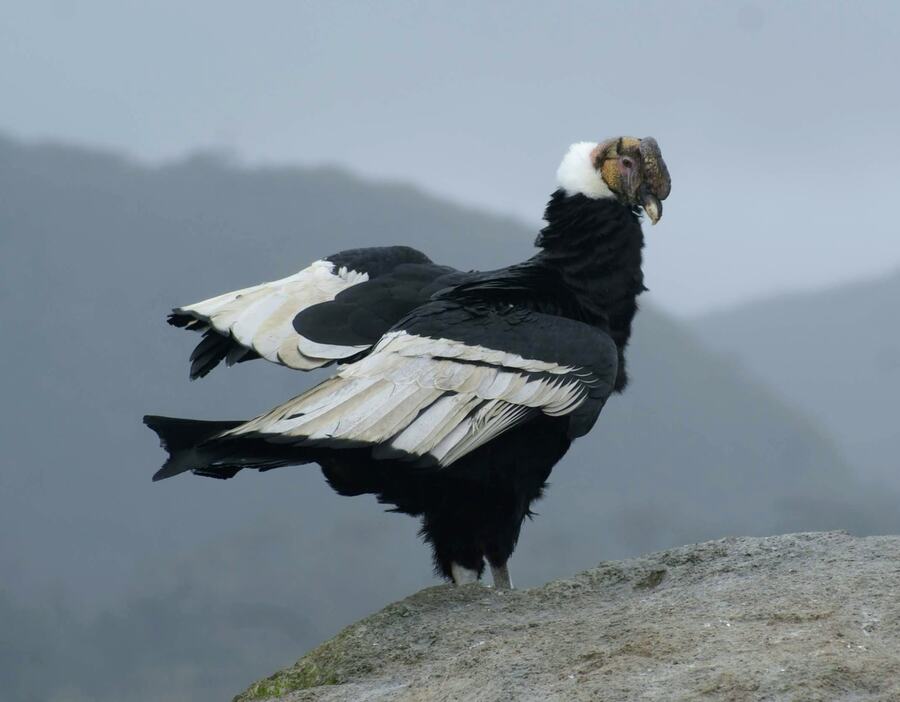
Poisoned baitsCarcasses laced with poison to kill pumas and foxes kill condors in Argentina, Chile, Colombia, Ecuador, Peru and probably Bolivia. By early 2020 experts had compiled 225 poisoned individuals across the range, about half of which died; many cases are never detected.
Lead poisoningCondors swallow lead fragments from hunting ammunition in carcasses. Wild condors examined in Argentina (76 birds) had blood lead levels up to 104 µg/dL, far above those of captive-bred birds, and lead poisoning is now considered a widespread major threat across the range (Wiemeyer et al. 2017).
PersecutionSome ranchers shoot condors because of alleged attacks on livestock, although such attacks are extremely rare. Birds are also illegally captured for trade, pets and folkloric events.
Power lines and habitat changeCollisions with electricity and telecommunication infrastructure, and conversion of natural vegetation to farmland and plantations, add to mortality and habitat loss.
Food shortages linked to warming seas and fisheriesRising sea temperatures shift the distribution, abundance and quality of prey fish, and overfishing has contributed to prey collapses. Norway’s largest colony, Røst, fell from almost 1.5 million breeding pairs in 1979 to about 289,000 pairs in 2015 and produced virtually no chicks for years.
Invasive predatorsIntroduced rats eat eggs and chicks, and escaped American mink take puffins from burrows; both have caused colony declines and local extinctions.
HuntingPuffins are legally hunted in Iceland and the Faroe Islands. Annual takes of about 150,000 birds in Iceland and 10,000 at Nólsoy (Faroes) have been recorded and may limit recovery.
Oil spills, storms and pollutionThe Amoco Cadiz spill in 1978 killed at least 1,391 puffins and coincided with a 44% fall in the Sept-Îles population in Brittany. Severe winter storms cause “wrecks” in which thousands of starving birds die.
Forest loss and fragmentationAn analysis of 2000–2012 deforestation estimated 26% forest loss within the range over three generations. The species needs large tracts of forest and cannot persist where lowland forest has been reduced to small fragments; in its stronghold in north-east India only about 5% of the landscape offers suitable habitat.
HuntingIts predictable use of the same fruit trees and nest holes makes it easy to hunt. Birds are taken for food, for their casques and tail feathers used as ornaments, and for their fat, used in traditional medicine. In north-east India a casque can fetch up to US$90.
Loss of nest treesLogging removes the large, old trees with cavities on which breeding depends.
Pet tradeChicks are collected from nests for the pet trade, as reported in southern India and Thailand.
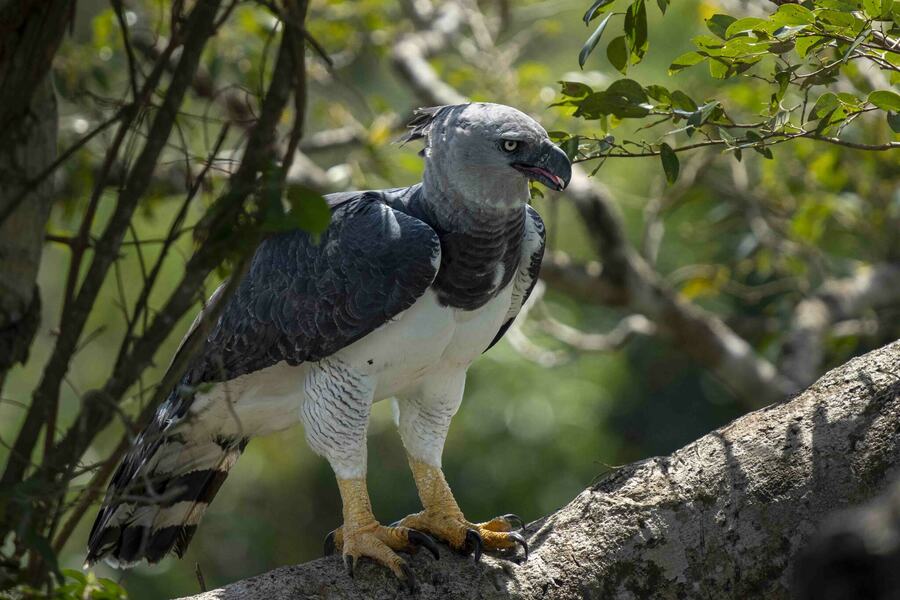
Deforestation and forest degradationAbout 8% of tree cover with at least 50% canopy cover was lost within the species’ range from 2001 to 2020; if this continues, about 27% would be lost over three generations (60 years). In Mato Grosso, Brazil, three fledglings starved in landscapes with 50–70% forest loss, and no nests were found where more than 70% had been cleared (Miranda et al. 2021).
Hunting and persecutionAlthough not eaten, harpies are frequently shot across much of the range — sometimes to protect livestock, sometimes out of curiosity. In some areas this may affect the population more than forest loss.
Selective logging and power linesRemoval of the largest trees eliminates nest sites, and collisions with power lines are an additional source of mortality.
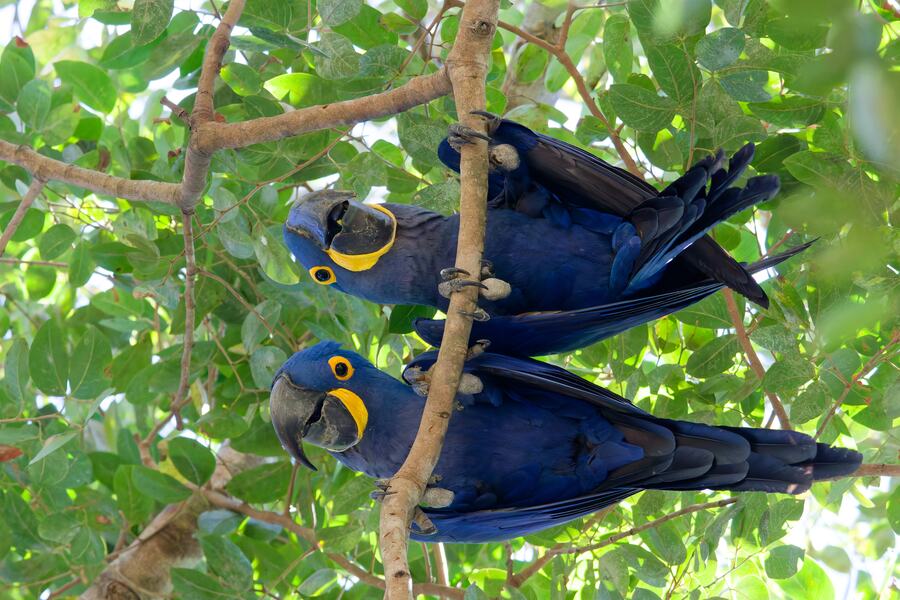
Illegal tradeTrade grew rapidly from the 1960s to the 1980s; at least 10,000 birds were taken from the wild in the 1980s. Trade was almost halted by the early 2000s but continues at a low level, and the species remains highly valuable in international markets.
Habitat loss and fireForest is being converted to pasture, soya and plantations. Wildfires in 2020 affected over 40,000 km² — about 26% of the Brazilian Pantanal — and in 2019 almost half of 98 recorded nests at the Refúgio Ecológico Caiman were affected by fire or heat; fires also destroyed large areas of acuri and bocaiúva palms.
DiseaseFrom 2015 to 2018, 177 birds were found dead from herpesvirus in the Brazilian Pantanal.
Local huntingSome hunting and trapping occur for food and for feathers used in indigenous handicrafts.
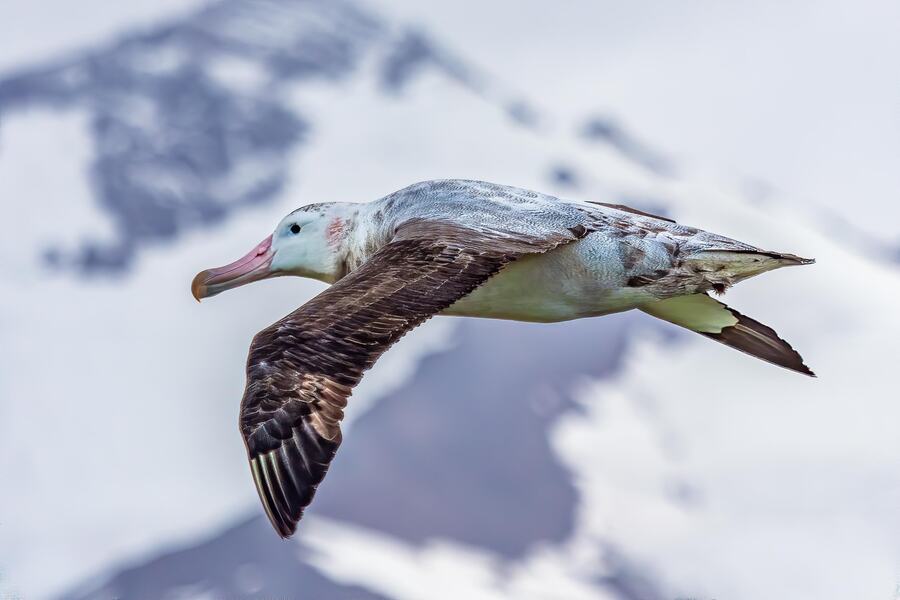
Longline fisheries bycatchBirds are hooked and drowned when taking bait from longlines. This has reduced adult survival and recruitment; on South Georgia the population fell by 1.8% per year in 1984–2004 and continued to decline at the same rate to 2015. Juveniles and females forage further north, where they overlap more with tuna longline fleets.
Introduced house miceOn Marion Island, mice have attacked albatross chicks since 2003. Attacks on Wandering Albatross chicks remain at a low level, but mice now also attack the chicks of other albatross species.
Past exploitationThe Macquarie Island population was harvested extensively by sealers and remains tiny (about four breeding pairs a year).
Conservation stories
Brought back
What worked, for whom — and what challenges remain.
Photo: Pierre Tellier · CC BY 4.0 · Source · Resized and recompressed
01
Atlantic Puffin
VUVulnerable · 2018
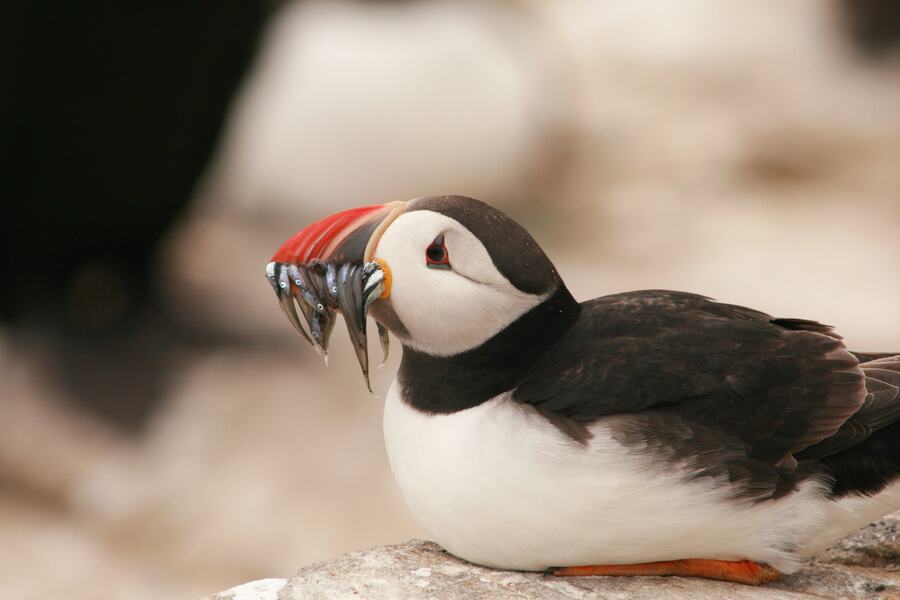
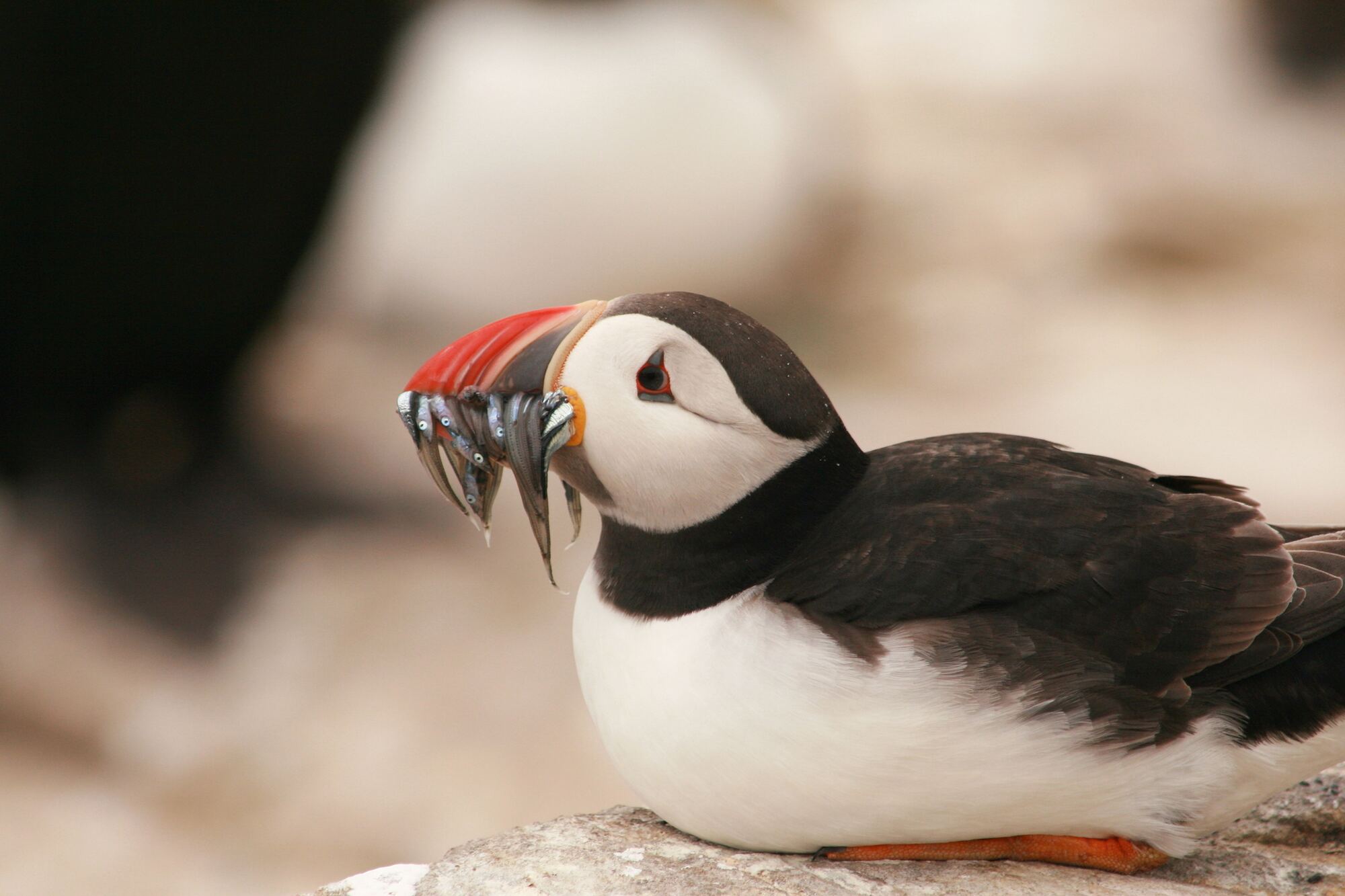
Lundy, an island in the Bristol Channel, had only 13 puffins in 2000. Between 2002 and 2004 the Lundy Seabird Recovery Project — Natural England, the RSPB, the National Trust and the Landmark Trust — eradicated the island’s rats, and Lundy was declared rat-free in 2006. Puffins increased to 375 birds by the late 2010s (Booker et al. 2019) and 1,335 in 2026, while Manx Shearwaters rose from fewer than 600 to more than 25,000 individuals.
What helped
Rat eradications on breeding islands, such as Lundy (UK).
Control of American mink in Iceland and Norway.
Audubon’s Project Puffin reintroductions on islands off Maine.
Monitoring of colonies and breeding success across the North Atlantic.
Challenges that remain
Food shortages linked to warming seas and fisheries · Invasive predators · Hunting · Oil spills, storms and pollution
Photo: Matt Felperin · CC BY 4.0 · Source · Resized and recompressed
02
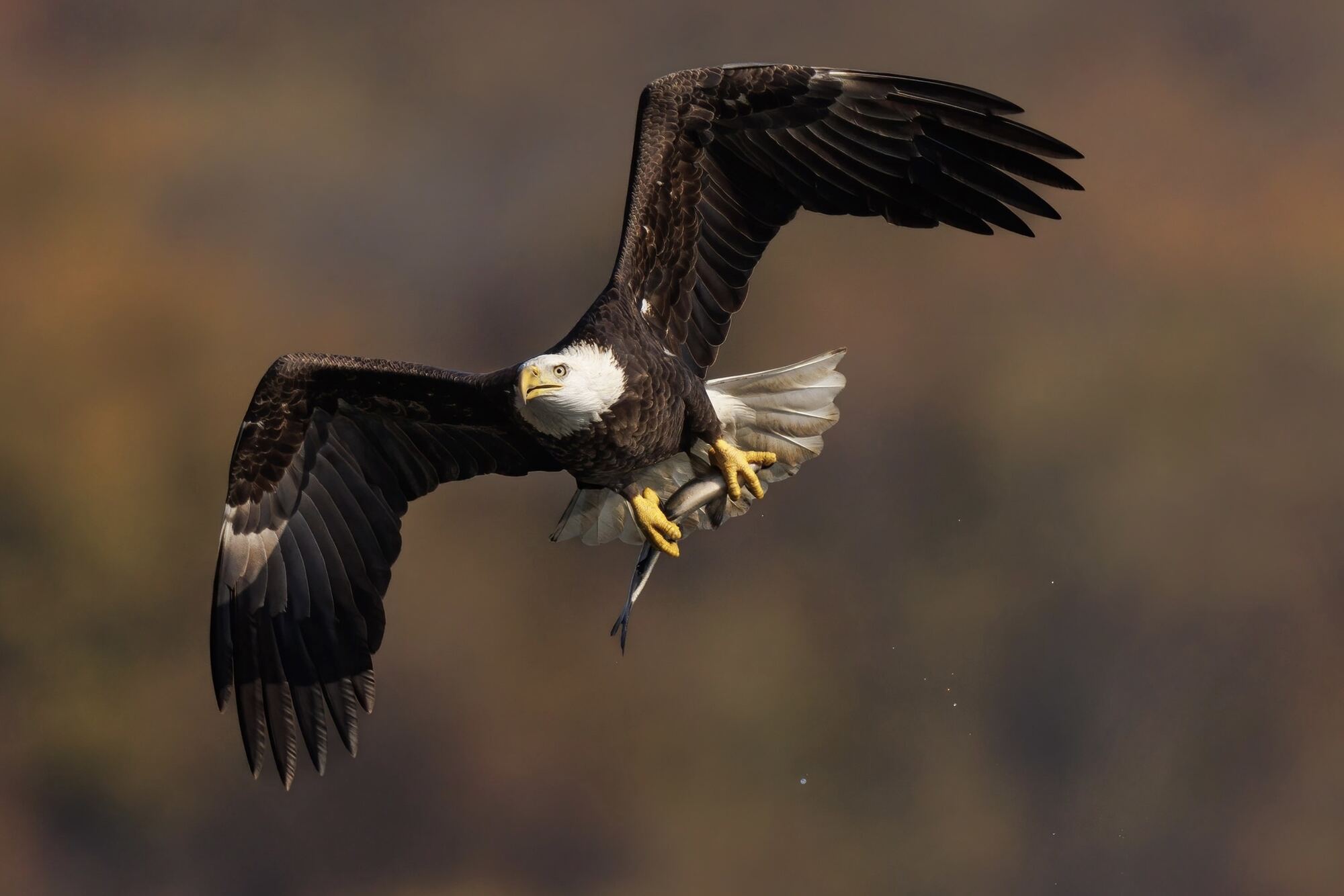
Bald Eagle
LCLeast Concern · 2024
By 1963 only about 417 known nesting pairs of Bald Eagles remained in the lower 48 United States. DDT, sprayed widely after the Second World War, was the main culprit: its breakdown product DDE thinned eggshells so much that many eggs broke during incubation. After the US cancelled DDT’s registration at the end of 1972 and the eagle was protected under the Endangered Species Act, productivity recovered — between 1990 and 2000 the nesting population grew by about 8% a year. By 2007 there were an estimated 9,789 breeding pairs and the species was delisted. The most recent federal estimate (2019 data) put the lower-48 population at about 316,700 eagles, though new survey methods mean that figure is not directly comparable with the historical counts.
What helped
DDT registration cancelled in the USA (31 December 1972); dieldrin, heptachlor, chlordane and other persistent pesticides restricted from 1976.
Listed as endangered south of 40°N in 1967, and in 43 states (threatened in five) under the Endangered Species Act in 1978.
Delisted in the lower 48 states, effective 8 August 2007; still protected under the Bald and Golden Eagle Protection Act and Migratory Bird Treaty Act.
Challenges that remain
DDT and organochlorine pesticides (historical) · Lead poisoning · Shooting, poisoning and habitat loss (historical and ongoing)
Photo: Brooke J. · CC BY 4.0 · Source · Resized and recompressed
03
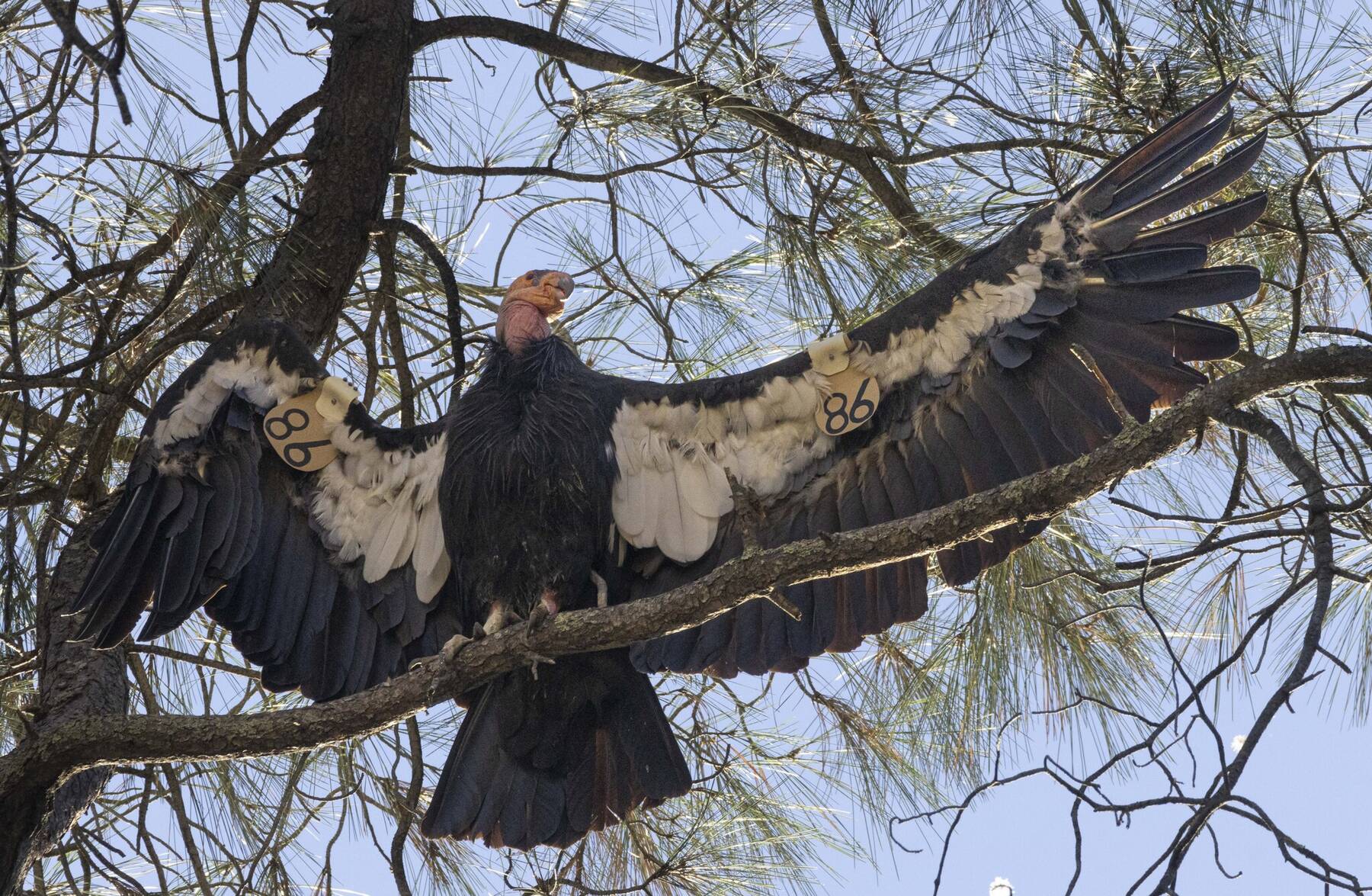
California Condor
CRCritically Endangered · 2020
By 1982 only 22 California Condors remained, and in 1985 only nine wild birds were left. The remaining wild birds were then captured, the last on 19 April 1987, so that every condor alive (27 in total) was in captivity. Eggs had already been taken from wild nests from 1983 for captive rearing. Captive pairs were induced to lay extra eggs by removing their first clutch, and in January 1992 the first captive-bred condors were released in California.
Releases followed in Arizona in 1996 and in Baja California in 2002, and wild breeding resumed in 2002. USFWS recorded 16 wild-fledged chicks across the flocks for 2025. By 31 December 2025 the world population had reached 607, with 392 birds flying free.
The central problem has not been solved. Lead from ammunition remains the leading known cause of death, and the wild population grows only because captive-bred birds keep being released. In 2023, avian influenza killed 21 birds in Arizona and Utah in a matter of weeks, showing how vulnerable small flocks are. Self-sustaining populations will require much lower lead exposure across the condor’s range.
What helped
All remaining wild condors (27 birds in total) brought into captivity by April 1987.
Captive breeding at The Peregrine Fund’s World Center for Birds of Prey (since 1993), Los Angeles Zoo, San Diego Zoo Safari Park, Oregon Zoo and Chapultepec Zoo (Mexico City).
Releases since 1992 in California, since 1996 at Vermilion Cliffs (Arizona), since 2002 in Baja California, and more recently in the Pacific Northwest.
California’s AB 711 (passed 2013) phased out lead ammunition for hunting statewide by 2019.
Challenges that remain
Lead poisoning · Highly pathogenic avian influenza · Shooting, power lines and other human causes · Dependence on management
Photo: Tejas M · CC BY 4.0 · Source · Resized and recompressed
04
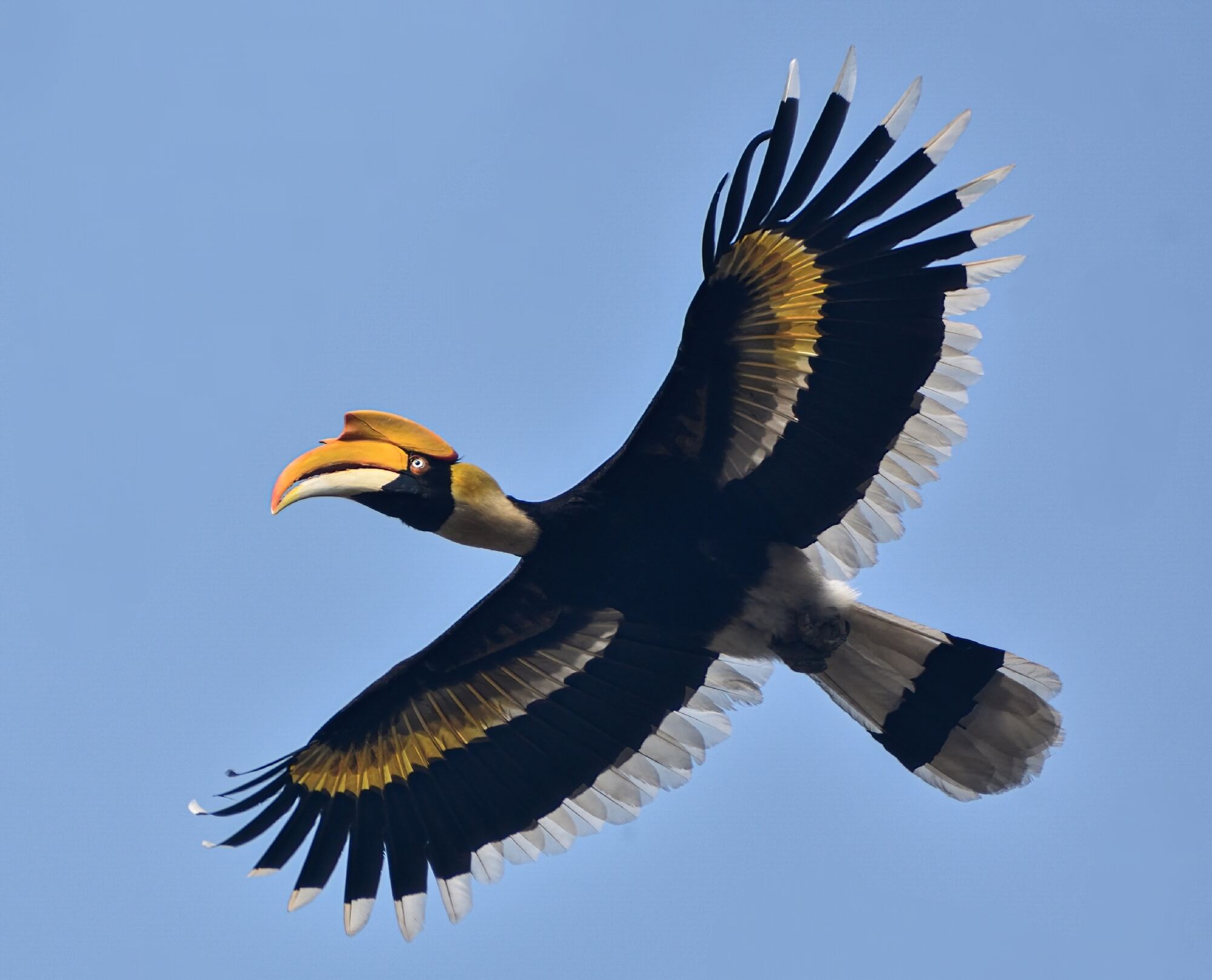
Great Hornbill
VUVulnerable · 2020
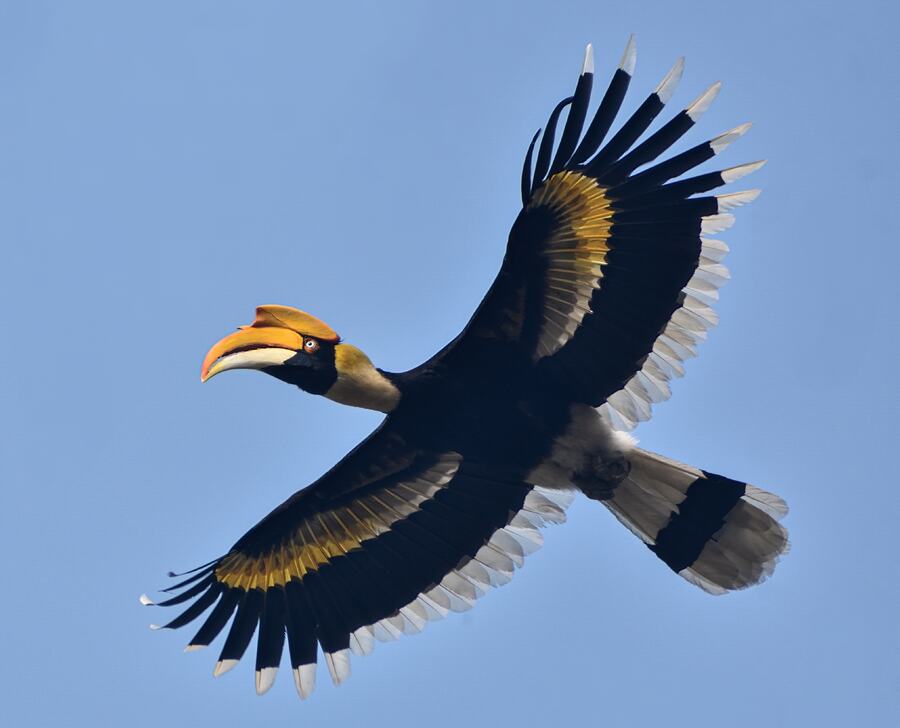
In the foothill forests of Arunachal Pradesh, Nyishi people traditionally hunted hornbills for food and for casques and tail feathers used as adornments. In 2011 the Nature Conservation Foundation, the Ghora-Aabhe Society (a council of Nyishi village elders) and the Arunachal Pradesh Forest Department started the Hornbill Nest Adoption Programme in forests next to Pakke Tiger Reserve. Villagers, including former hunters, are paid to find, watch and protect hornbill nests, and the salaries are funded by donors who "adopt" a nest for Rs 6,000 or US$125 a year.
By 2024 the programme had protected about 40 nests of four hornbill species (Great, Wreathed, Oriental Pied and Rufous-necked), and 220 chicks had fledged from them. Outside the breeding season, the nest protectors also count hornbills at roosts and along forest transects, adding long-term data.
Nest protection does not stop forest loss or hunting away from the nests, and the species has already disappeared from many unprotected forests. Its long-term future depends on keeping large, connected tracts of forest with big trees, and on reducing hunting across its range.
What helped
Hornbill Nest Adoption Programme near Pakke Tiger Reserve, Arunachal Pradesh, India, since 2011.
Hornbill nest adoption in Budo Sungai-Padi National Park, southern Thailand, since 1994.
Long-term research at Khao Yai National Park, Thailand, since 1981, including active management of nest cavities.
Nest monitoring with the Kadar community in Kerala and artificial nest boxes in Thailand and southern India.
Challenges that remain
Forest loss and fragmentation · Hunting · Loss of nest trees · Pet trade
Photo: DiegoH · CC BY 4.0 · Source · Resized and recompressed
05
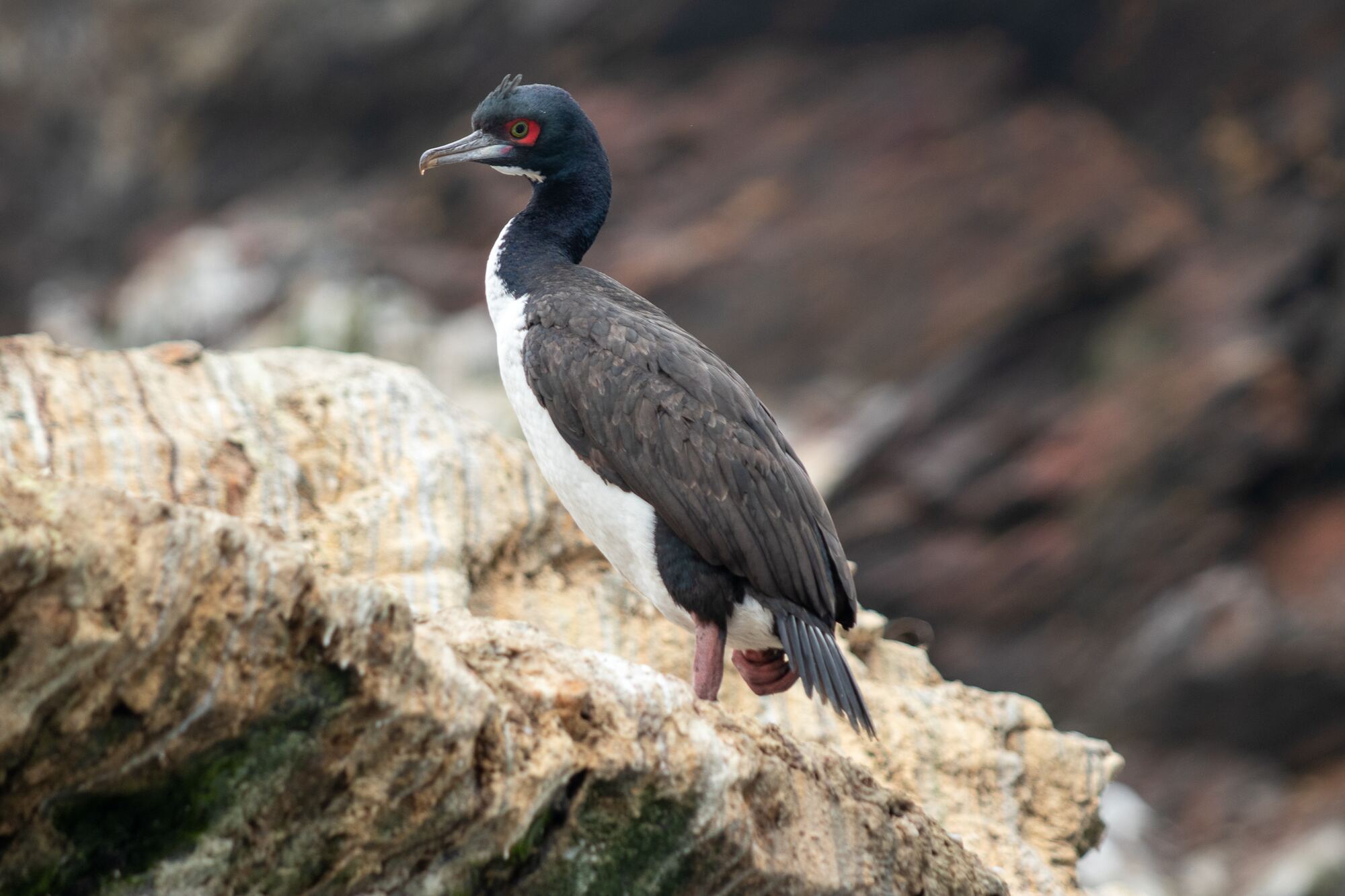
Guanay Cormorant
NTNear Threatened · 2018
Estimates for the Peruvian population illustrate its boom-and-bust history: fewer than 4 million birds during 1909–1920, about 21 million in 1954, and about 3.7 million on the north-central coast in 1996. Severe El Niño events in particular caused mass mortality and breeding failure, from which the population has repeatedly recovered — but each recovery has taken place in competition with an industrial fishery.
What helped
Legal protection in Peru.
Breeding colonies within managed guano reserves and marine protected areas.
Systematic monitoring of guano-bird populations.
Education and awareness programmes that have raised the species’ local profile.
Challenges that remain
Competition with the anchovy fishery · El Niño events · Bycatch and hunting · Guano extraction
Photo: Donald Davesne · CC BY 4.0 · Source · Resized and recompressed
06
Hyacinth Macaw
VUVulnerable · 2025
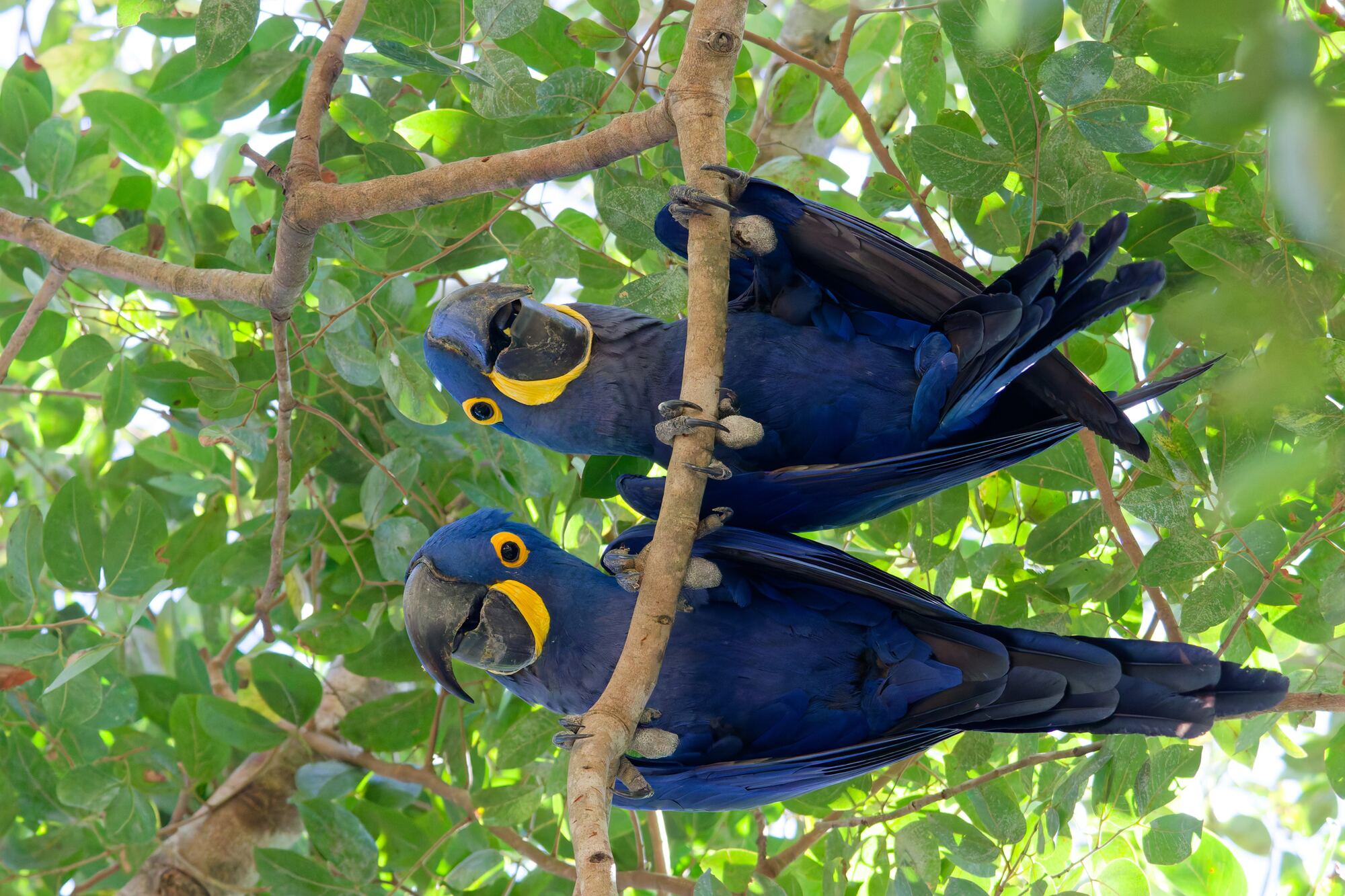
In 1987 the world population was estimated at about 3,000 birds (range 2,500–5,000), after an estimated 10,000 or more had been trapped for the pet trade during the 1980s. As enforcement improved and Pantanal ranchers began to protect the birds, numbers grew: by 2003 the population was estimated at about 6,500 individuals, around 62% of them in the southern Pantanal. At one Pantanal roost, counts tripled from 234 birds in 2001 to 708 in 2015. BirdLife now estimates 4,700–11,000 mature individuals and considers the population stable, though recent fires and disease are new concerns.
What helped
CITES Appendix I; protected by Brazilian and Bolivian law and banned from export in all range countries.
Artificial nest boxes and management of nests and chicks in the Brazilian Pantanal (Instituto Arara Azul).
Supplementary feeding after the 2020 Pantanal fires destroyed food palms.
Included in Brazil’s National Action Plan for the Conservation of the Birds of the Cerrado and Pantanal.
Challenges that remain
Illegal trade · Habitat loss and fire · Disease · Local hunting
Photo: M Rutherford · CC BY 4.0 · Source · Resized and recompressed
07
Kākāpō
CRCritically Endangered · 2018
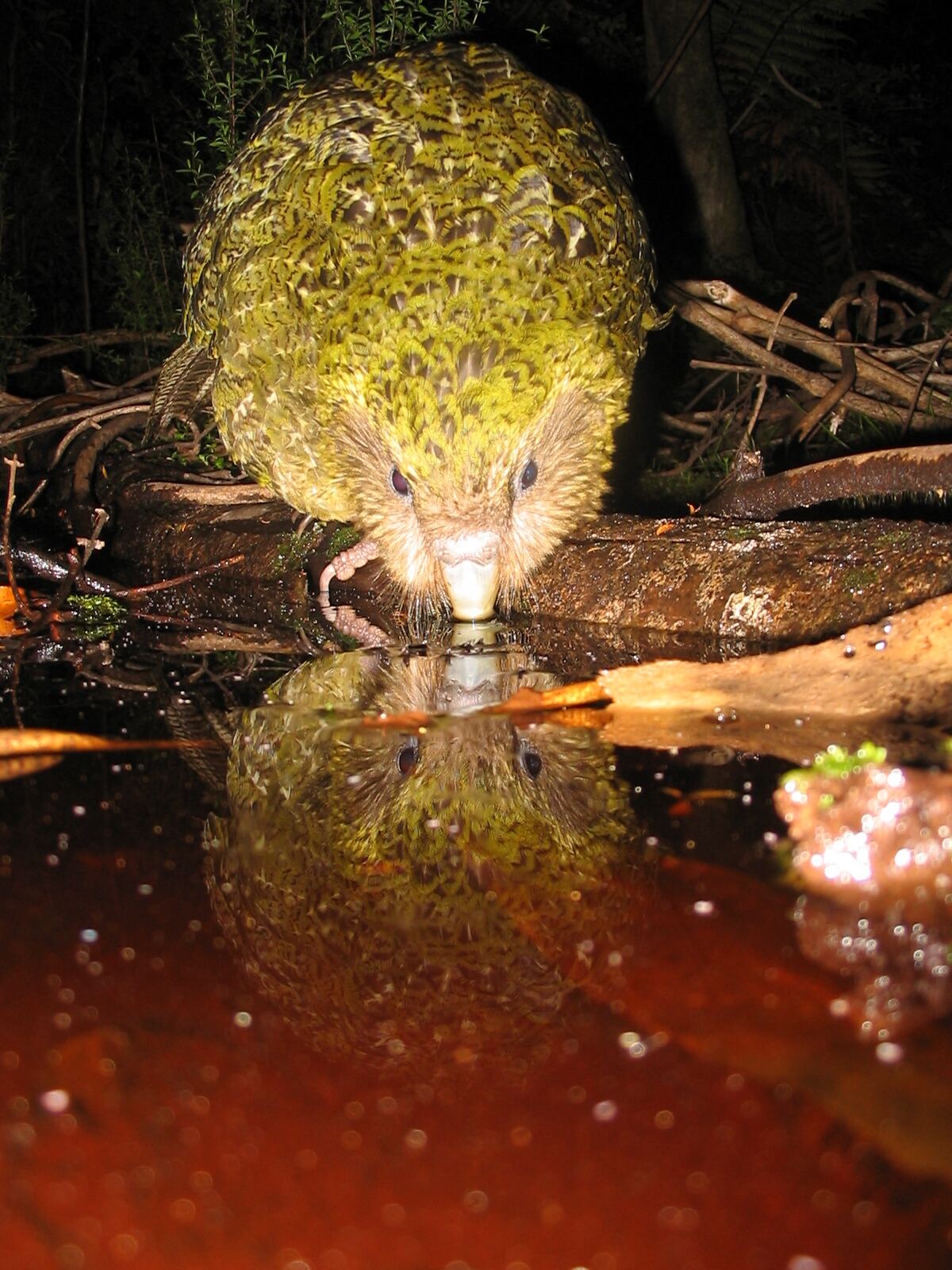
By 1976 the only kākāpō known were 18 males in Fiordland. The discovery of about 150 birds on Stewart Island in 1977 gave hope, but cats were killing many of them, so between 1980 and 1992 the 61 survivors were moved to offshore islands cleared of predators. When the dedicated recovery programme was formed in 1995, the species numbered 51 birds, including only 20 females.
Intensive management followed. Every bird is radio-tagged, nests are monitored around the clock, chicks at risk are hand-reared, and supplementary food is given to breeding females. The population grew slowly, but rose sharply after large rimu masts in 2016, 2019 and 2022, doubling between 2016 and 2023. The 2026 season, the first in four years, was a record: 90 chicks were added to the official count on 1 September 2026, taking the population to 325, the highest of the modern recovery era.
Big challenges remain. Kākāpō breed only every two to four years, and many eggs are infertile. Disease is a growing concern: erysipelas has killed birds, cloacitis has affected others, and avian influenza is now a risk being prepared for. Most of all, the species needs more predator-free habitat large enough for a population that no longer depends on intensive management.
What helped
Between 1980 and 1992, 61 surviving Stewart Island birds were moved to predator-free offshore islands.
Introduced predators (stoats, possums, rats, cats) have been eradicated from every island the birds now use.
All birds are radio-tagged and tracked year-round; nests are watched with infrared cameras and sensors during breeding seasons.
Supplementary feeding, hand-rearing and artificial insemination (three chicks in 2009).
Challenges that remain
Introduced mammalian predators · Infertility and low genetic diversity · Disease · Infrequent breeding and limited habitat
Photo: Josh Noseworthy · CC BY 4.0 · Source · Resized and recompressed
08
Mauritius Kestrel
ENEndangered · 2023
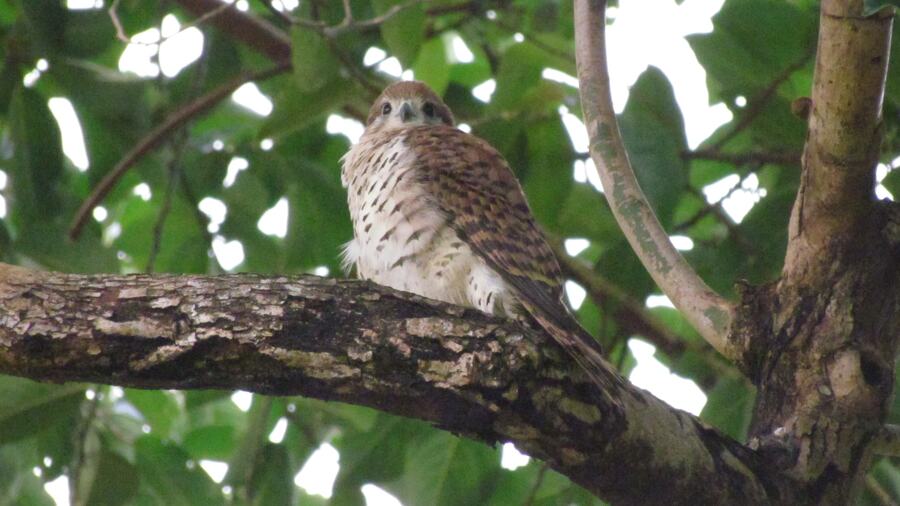
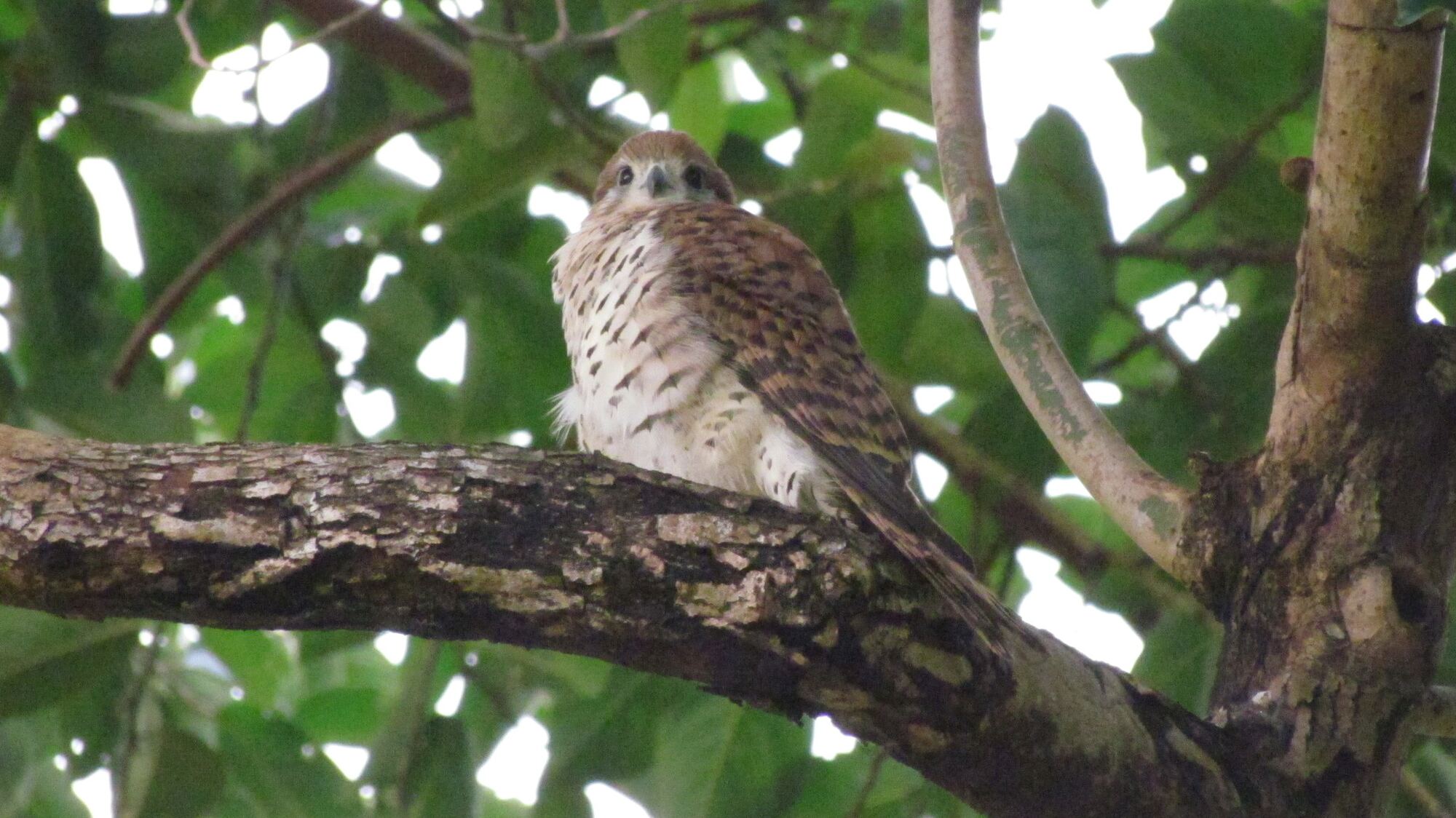
Forest clearance and organochlorine pesticides used in the 1950s and 1960s pushed the Mauritius Kestrel to the edge: by 1974 only four wild birds were known. A recovery effort had begun in 1973, and from the late 1970s it was led by the biologist Carl Jones. From 1984 to 1994 the team bred kestrels in captivity, removing first clutches so that pairs would lay again, released captive-bred birds into new mountain ranges, fed wild pairs, put up nest boxes, controlled predators around nests and rescued eggs from failing nests. The Peregrine Fund alone produced 46 captive-bred birds for release between 1988 and 1991.
The results were spectacular. By the end of the 1990s there were probably 350–500 birds and 99 breeding pairs across four subpopulations, and the species was downlisted from Endangered to Vulnerable. It became one of the best-known examples of a bird saved from extinction.
The recovery has not lasted. With releases stopped since 1994 and little active management, numbers fell from the late 2000s: the small northern subpopulation disappeared by 2007, the western one shrank to fewer than 15 pairs by 2018, and the total fell below 250 birds. The species was uplisted to Endangered in 2014. Invasive plants, introduced predators, scarce nest sites and very low genetic diversity all hold it back, and Mauritius probably cannot support more than about 1,000 kestrels even in the best case. The story shows that rescuing a species is not the same as securing it.
What helped
Recovery programme initiated in 1973, at first focused on research; The Peregrine Fund was involved from the start.
1984–1994: captive breeding and releases, supplementary feeding, nest boxes, nest guarding, predator control at nests and release sites, clutch manipulation and rescue of eggs and chicks.
Releases in the Bambous and Moka mountain ranges and the Bel Ombre region.
Ongoing provision of nest boxes and monitoring of survival and breeding.
Challenges that remain
Invasive plants · Introduced predators · Shortage of nest sites · Inbreeding and disease · Climate change
Photo: Christoph Moning · CC BY 4.0 · Source · Resized and recompressed
09
Northern Bald Ibis
ENEndangered · 2018
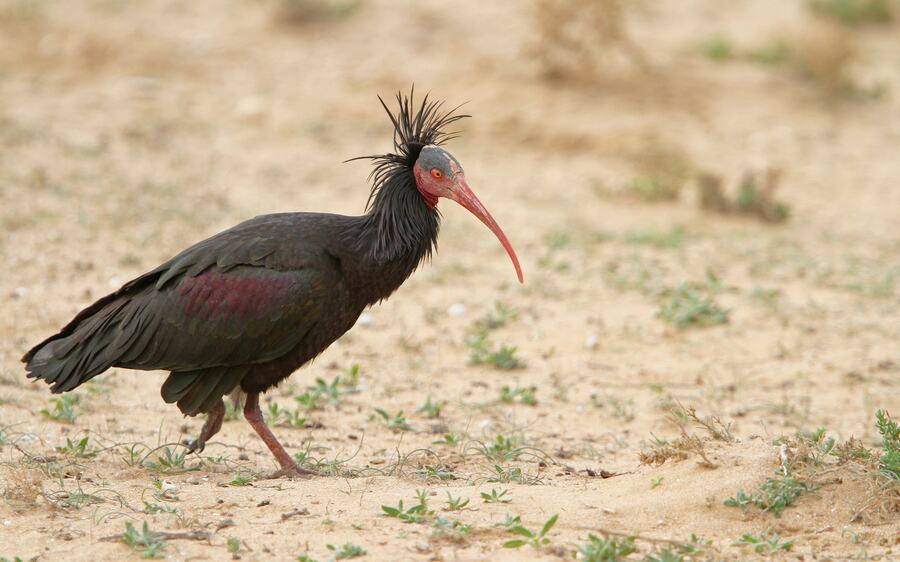
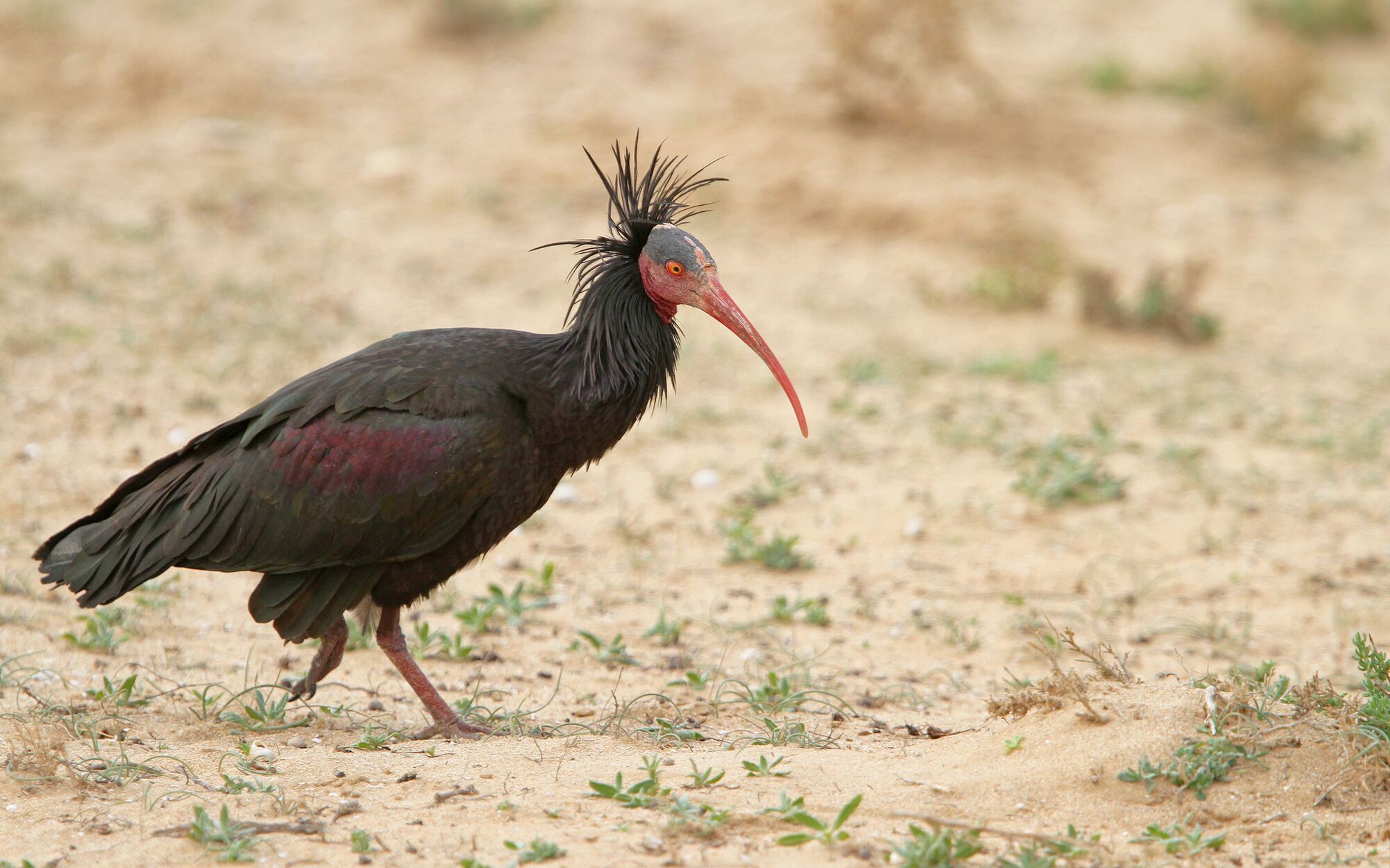
The Moroccan colonies came close to collapse in the 1990s: after a mysterious die-off of 40 birds in 1996 only 59 breeding pairs remained. Souss-Massa National Park had been created in 1991 specifically for the ibis, and from 1994 a monitoring and research programme involved local people. Protection from disturbance and providing fresh water near the colonies helped the population grow steadily, to 147 breeding pairs and more than 700 birds by 2018. This recovery led to the species being downlisted from Critically Endangered to Endangered in 2018.
The eastern population had a sadder story. A tiny migratory colony rediscovered at Palmyra, Syria, in 2002 bred well for a few years, but its birds were hunted on migration, and by 2015 none returned. Releases from the managed colony at Birecik, Türkiye, failed to rescue it. In Europe, where the species had been gone for centuries, Waldrappteam began hand-raising chicks and leading them to wintering grounds in Tuscany in human-led migrations. By the end of 2025 this migratory population had reached 323 birds, above the modelled threshold for a potentially self-sustaining population, and around 70% of birds migrated without human help in late 2025.
Challenges remain. The Moroccan birds still occupy only a few sites, so a single disaster could be devastating. Reintroduced birds die from electrocution, illegal shooting in Italy and predation, and climate change is making the crossing of the Alps harder, forcing the project to develop a new migration route to Andalusia. Long-term success will depend on enough birds migrating and breeding without help.
What helped
Souss-Massa National Park designated in 1991 to protect nesting and feeding areas; monitoring with local wardens since 1994.
Fresh water provided near Moroccan colonies, shown experimentally to increase breeding success.
International Advisory Group (IAGNBI) since 1999 and an AEWA International Single Species Action Plan (revised 2015).
Reintroduction in Andalusia, Spain (about 190 birds released 2004–2009) and the Waldrappteam/EU LIFE project in Austria and Germany with human-led migration.
Challenges that remain
Disturbance and development near colonies · Hunting and poaching · Electrocution on power lines · Pesticides · Climate change
Photo: Brooke J. · CC BY 4.0 · Source · Resized and recompressed
10
Peregrine Falcon
LCLeast Concern · 2021
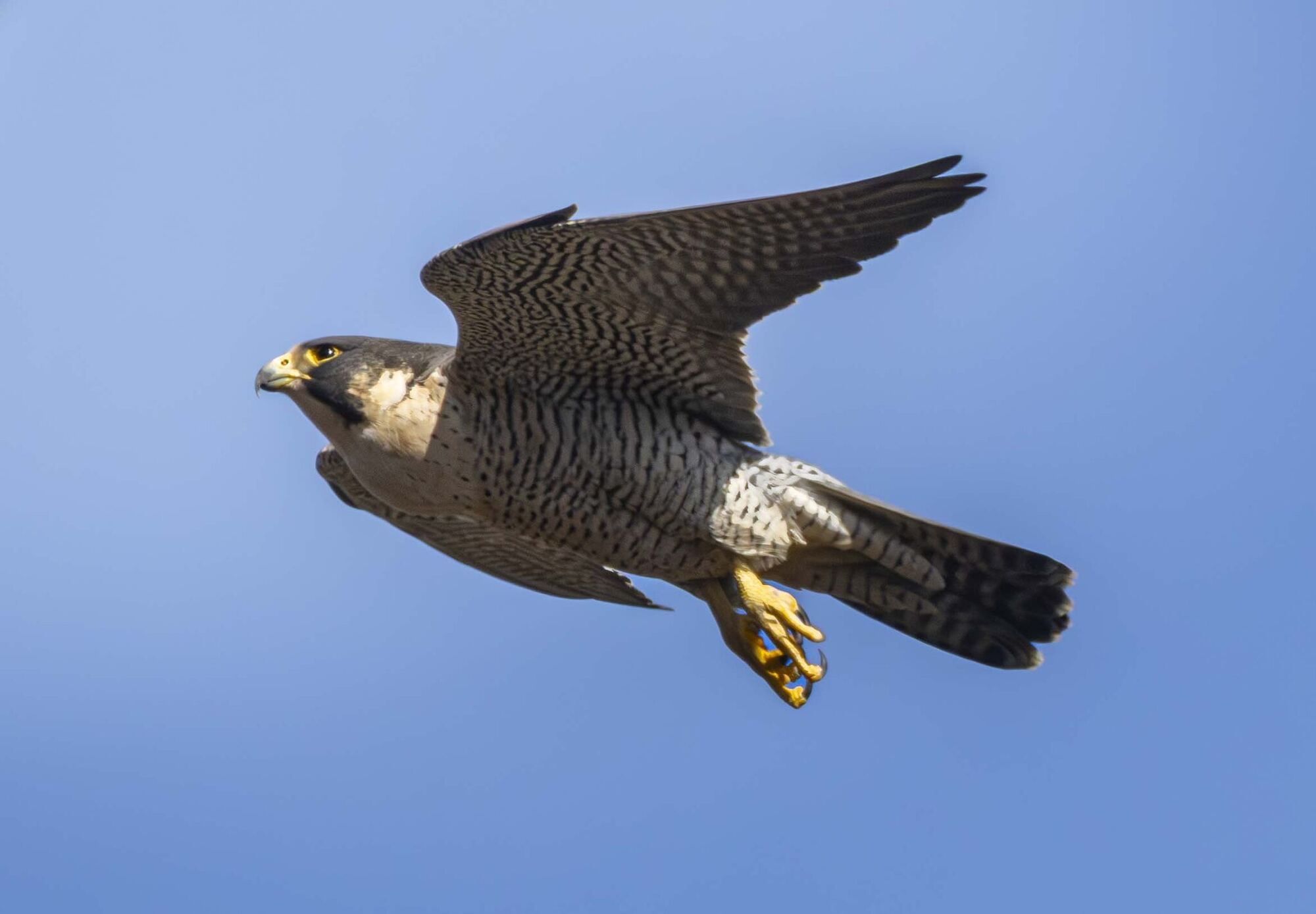
In the 1960s, British naturalist Derek Ratcliffe noticed peregrine eyries with broken eggs. Weighing eggshells in museum collections, he found that shells had become markedly lighter from the late 1940s onward — just after DDT came into widespread use (Ratcliffe 1967). Follow-up work in Britain and North America linked eggshell thinning to organochlorine residues. By 1975 North America held only an estimated 324 nesting pairs, and the species had all but disappeared as a breeding bird from the eastern United States. After DDT was restricted and thousands of captive-bred falcons were released — many on city buildings and bridges — numbers climbed to at least 1,650 pairs in the USA and Canada, and the US Fish and Wildlife Service removed the American Peregrine Falcon from the Endangered Species List in August 1999.
What helped
Restrictions on DDT and related organochlorine pesticides from the 1970s.
Captive rearing and release under US Endangered Species Act recovery plans: nearly 7,000 birds released in North America by 1998.
American Peregrine Falcon delisted in the USA on 25 August 1999, followed by post-delisting monitoring.
Restoration of central Europe’s tree-nesting population — once c. 4,000 pairs, then extirpated — through releases in Germany and Poland, which had returned it to c. 20 pairs.
Challenges that remain
Organochlorine pesticides (historical) · Illegal persecution · Trapping for falconry · Collisions and disturbance
Photo: Wouter Beukema · CC BY 4.0 · Source · Cropped, resized and recompressed
11
Philippine Eagle
CRCritically Endangered · 2025
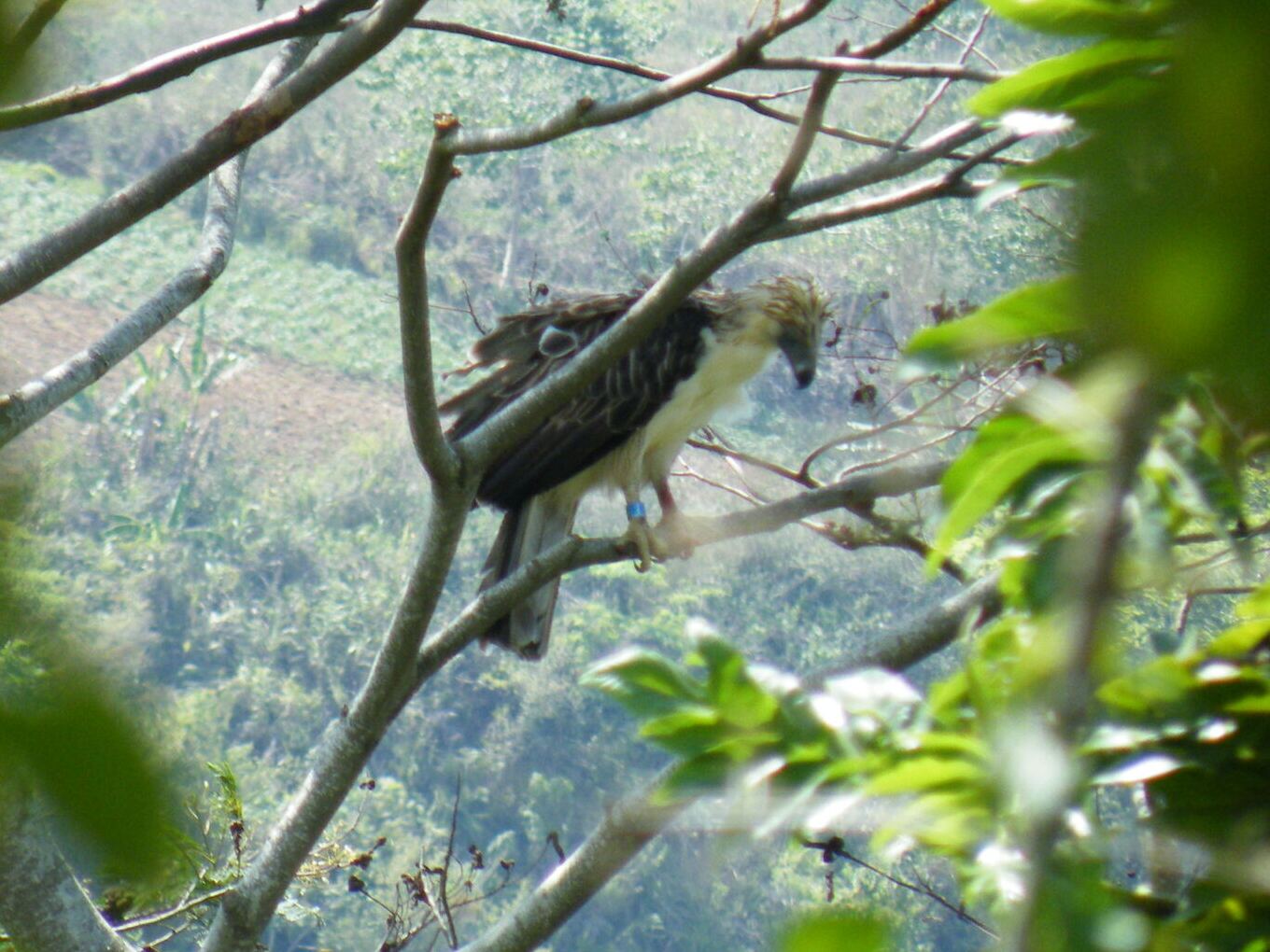
Before widespread deforestation began around 1900, there may have been as many as 6,000 Philippine Eagles. Clear-felling, then slash-and-burn agriculture, removed much of the lowland forest the eagle favours, and shooting emptied many remaining forests of breeding pairs. The species has been listed as Critically Endangered since 1994.
Conservation work since 1970 has included legal protection, surveys, awareness campaigns and captive breeding. The Philippine Eagle Foundation runs the only two facilities in the world that breed and rehabilitate the species, rescuing injured birds and releasing them where possible. On Luzon, the Haribon Foundation has worked with schools and Indigenous communities. Satellite tracking by researchers has mapped suitable habitat: about a third of it lies within protected areas, and new protected areas have been proposed on Mindanao, Leyte and Luzon.
How many eagles remain is still uncertain. Using tracking data, Sutton et al. (2023) estimated a potential maximum of 392 pairs (range 318–447), later revised to 387–462 pairs. Collar and Berryman (2025) argued that much suitable habitat is unoccupied and that Luzon densities are lower, suggesting 64–223 pairs as a best estimate. Whichever figure is closer, the population is small, slow-breeding and still declining, and its future depends on keeping large blocks of forest and stopping the shooting of eagles.
What helped
Legal protection against persecution and for nest sites; CITES Appendix I.
The Philippine Eagle Foundation operates the Philippine Eagle Center and the National Bird Breeding Sanctuary for captive breeding, rescue and rehabilitation.
Philippine Eagle Integrated Conservation Plan (1996, revised 2008; current framework 2021–2030).
Education and community programmes by the Haribon Foundation on Luzon, including forest guards and local rules on slash-and-burn farming.
Challenges that remain
Deforestation · Shooting and persecution · Very slow breeding · Mining and severe weather
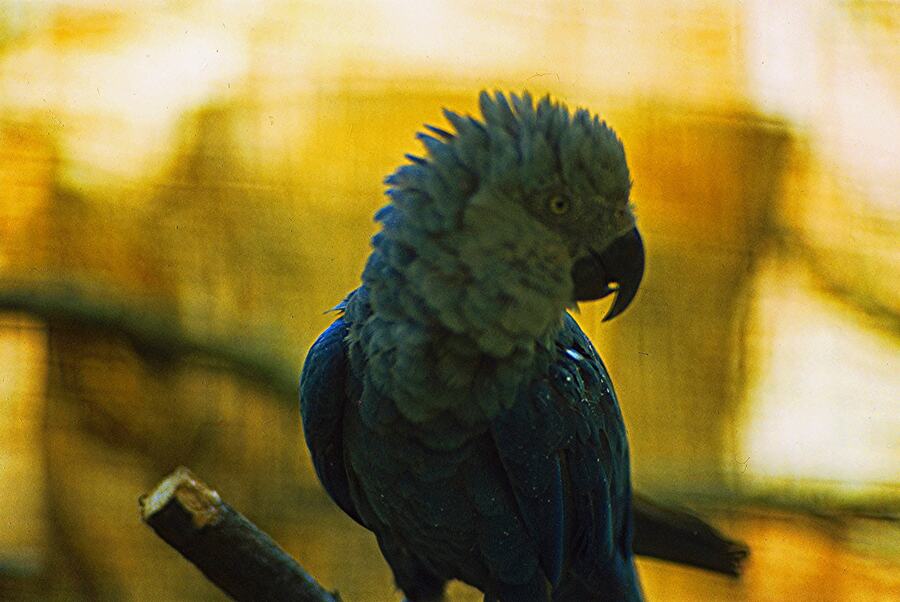
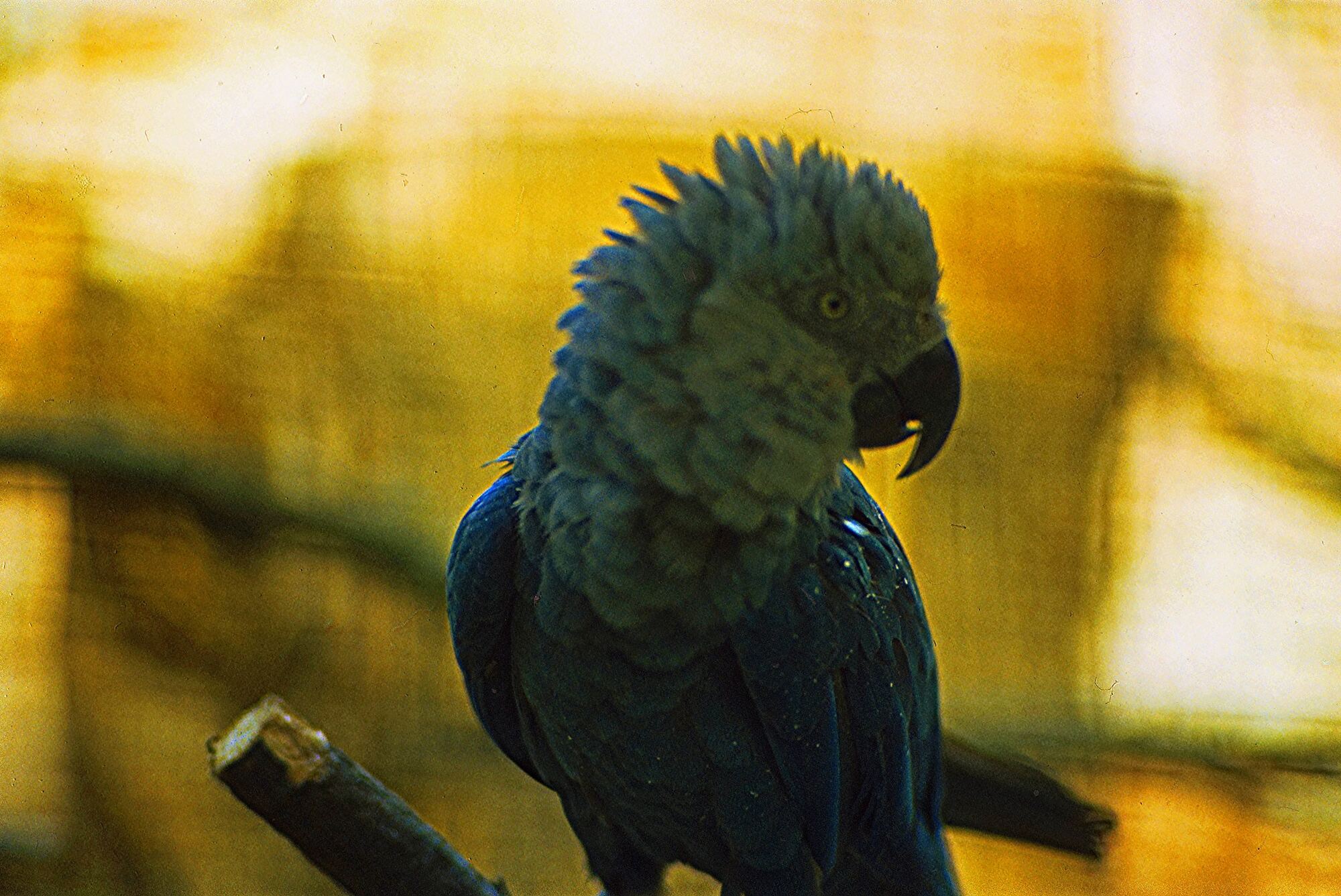
Spix’s Macaw was known for more than 150 years only from a handful of traded birds and the specimen collected by Johann Baptist von Spix. When its last wild population was finally traced in 1985–86, only three birds were left, and trappers took them in 1987 and 1988. In 1990 a single male was found, paired with a female Blue-winged Macaw. A captive female released in 1995 to join him disappeared after seven weeks, and the male was last seen at the end of 2000. In 2019 the IUCN declared the species Extinct in the Wild.
The species survived because of captive flocks. The official captive population grew from 60 declared birds in 2000 to more than 100 by 2015. In 2020, 52 birds were brought from ACTP in Germany to a new breeding and release centre in Curaçá. In June 2022, ICMBio and ACTP released eight Spix’s Macaws into the caatinga, and 20 had been released by the end of the year. Wild breeding followed quickly: in 2023 a pair hatched two chicks, the first wild nesting since 1986, although they died before fledging, and in May 2024 two wild-hatched chicks took their first flights.
The future is uncertain. About 58% of released birds survived their first year, and only 11 were flying free by mid-2024. ICMBio did not renew its cooperation agreement with ACTP in 2024. Then, in 2025, psittacine circovirus was detected, inspectors found that biosecurity rules were not being followed at the Curaçá breeding facility, and all 11 free-flying birds recaptured in November tested positive. Bringing Spix’s Macaw back will need disease-free birds, secure habitat and continued protection from trappers.
What helped
Protected under Brazilian law; CITES Appendix I.
Captive breeding, historically led by Al-Wabra Wildlife Preservation (Qatar) and later by ACTP (Germany), São Paulo Zoo and others.
Spix’s Macaw Wildlife Refuge and Environmental Protection Area designated in Curaçá and Juazeiro, Bahia, in 2018.
Habitat restoration, including work with farmers to reduce goat grazing in the caatinga.
Challenges that remain
Trapping for the illegal bird trade · Loss of caraibeira gallery woodland · Disease · Other historical pressures
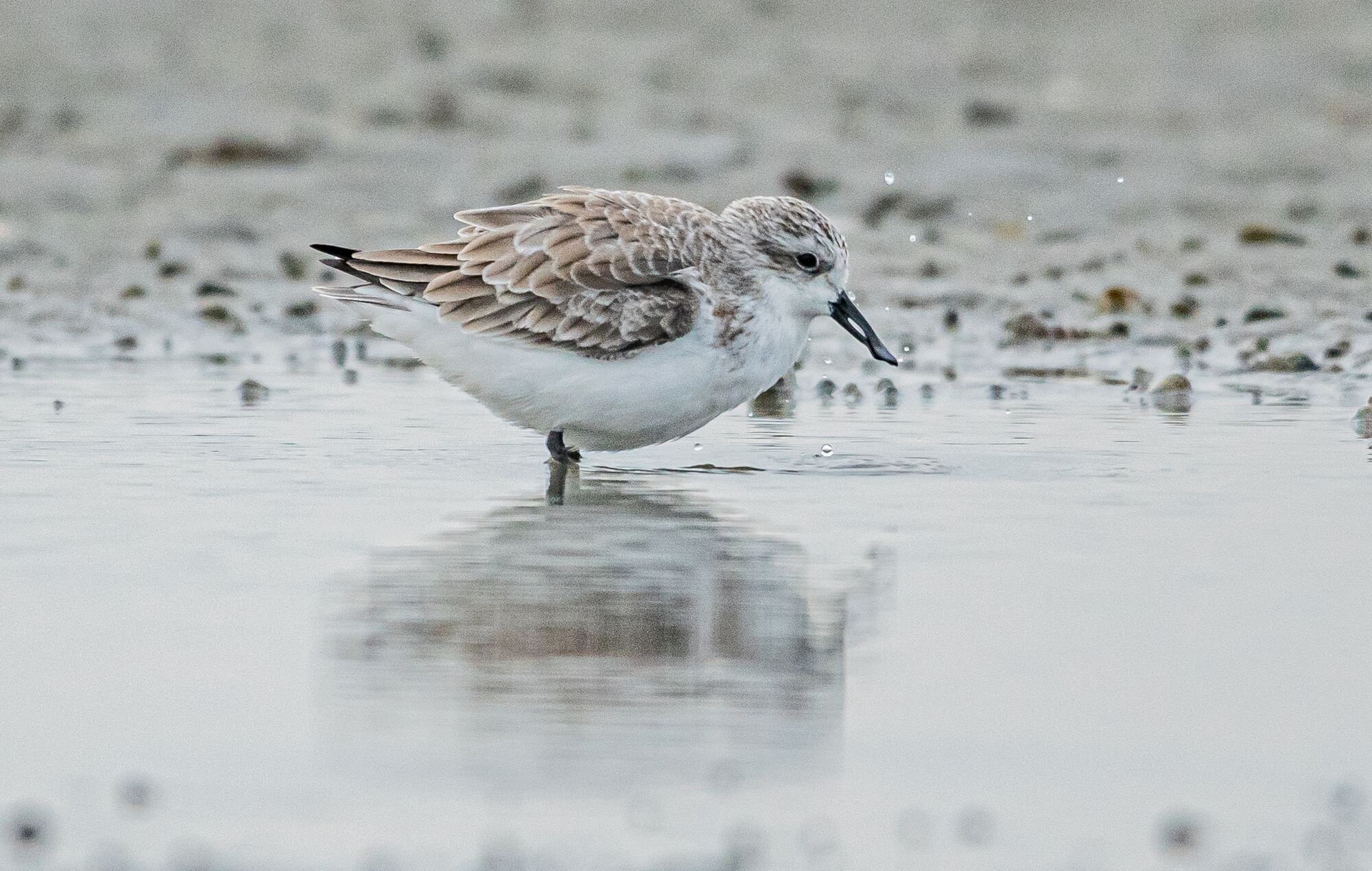
Surveys on the breeding grounds traced a collapse from an estimated 2,000–2,800 pairs in the 1970s to fewer than 1,000 pairs in 2000 and perhaps 120–200 pairs in 2009–10, an annual decline of about 26% between 2002 and 2008. Few young birds were joining the breeding population, and WWT describes a very real threat that the species would be extinct by 2019.
The response targeted both ends of the flyway. Since 2012, teams from WWT and Birds Russia have collected eggs in Chukotka, hatched them, reared the chicks in aviaries and released them as fledglings, protecting them from the high losses at the egg and chick stage. Pairs that lose their first clutch often lay again, so wild production rises too. From 2012 to 2021, 82% of 309 viable eggs hatched and 93% of the hatchlings were released. On the wintering grounds, conservationists persuaded hunters in Myanmar and Bangladesh to give up trapping in exchange for other livelihoods, and key sites gained protection, including in China, which stopped approving new reclamation of tidal flats in 2018.
The decline has slowed, to about 8% a year by 2014–2019, but it has not stopped. BirdLife notes that head-started birds had stopped offsetting the decline at the release site by 2019, and in 2023 only 10 breeding pairs were found at Meinypil’gyno. Fieldwork in Russia has been disrupted since 2020 and by the war in Ukraine. The species’ survival depends on keeping the remaining mudflats and ending trapping across its range.
What helped
Head-starting in Meinypil’gyno, Chukotka, since 2012 (WWT and Birds Russia).
Conservation breeding flock at WWT Slimbridge (UK), founded from eggs collected in 2011 and 2012.
Alternative livelihoods and hunting agreements with former trappers in Myanmar and Bangladesh.
New Ramsar sites in Myanmar (Nan Thar Island, Ayeyarwady Delta), protection plans for the Gulf of Mottama, and China’s 2018 halt on new reclamation of intertidal land.
Challenges that remain
Loss of tidal flats · Trapping and hunting · Low breeding success · Climate change
Photo: caroline legg · CC BY 4.0 · Source · Resized and recompressed
14
Western Barn Owl
LCLeast Concern · 2025
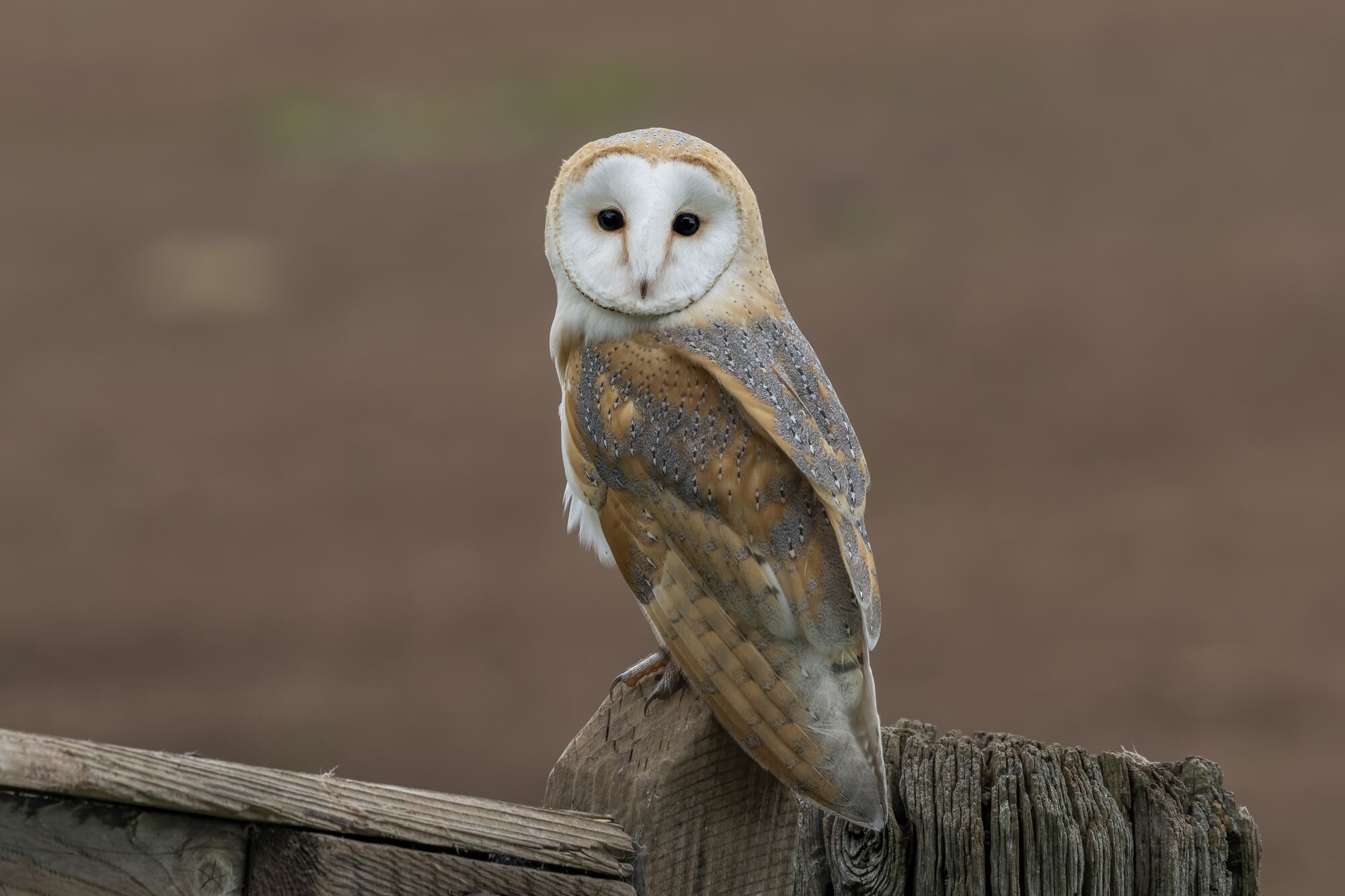
In 1983, farmers at Kibbutz Sde Eliyahu in Israel’s Beit She’an valley put up 14 nest boxes to attract barn owls as a natural form of rodent control. By 2007 the scheme covered about 90 km² of the valley with roughly 300 boxes, most of which were occupied (Meyrom et al. 2009). The idea spread nationally and, from 2002, across the border into Jordan, with later partnerships reported in the Palestinian territories, Cyprus and Morocco; by 2025 media reports cited around 5,000 boxes in Israel. The project is often presented as an example of conservation crossing political borders, though its effect on crop losses is still being evaluated.
What helped
Nest-box programmes in Europe and the Middle East.
Protection and re-establishment of rough-grassland foraging habitat.
Controls on the use of second-generation anticoagulant rodenticides.
Challenges that remain
Loss of rough grassland and farm buildings · Pesticides and rodenticides · Road traffic · Severe winters
Photo: Dr. Alexey Yakovlev · CC BY 4.0 · Source · Cropped, resized and recompressed
15
White-rumped Vulture
CRCritically Endangered · 2021
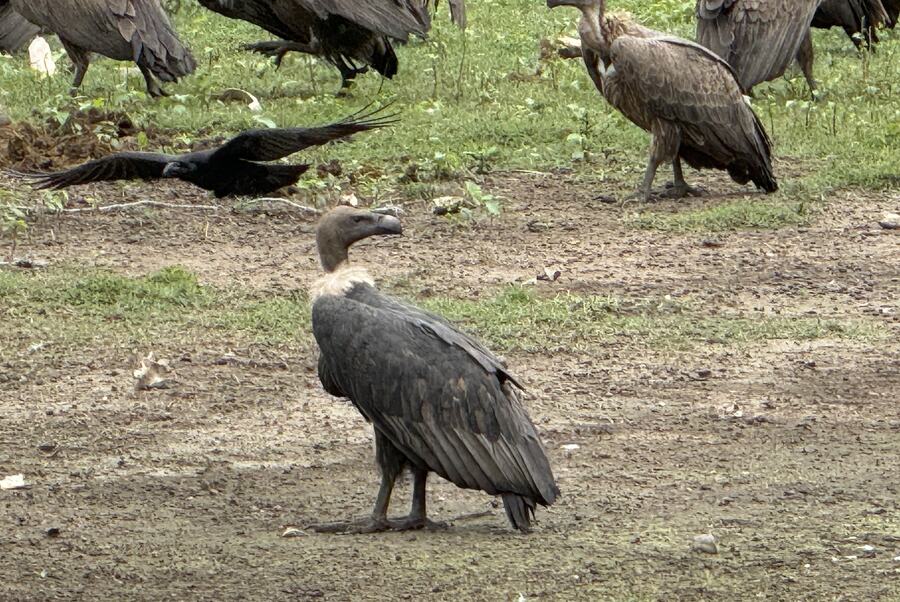
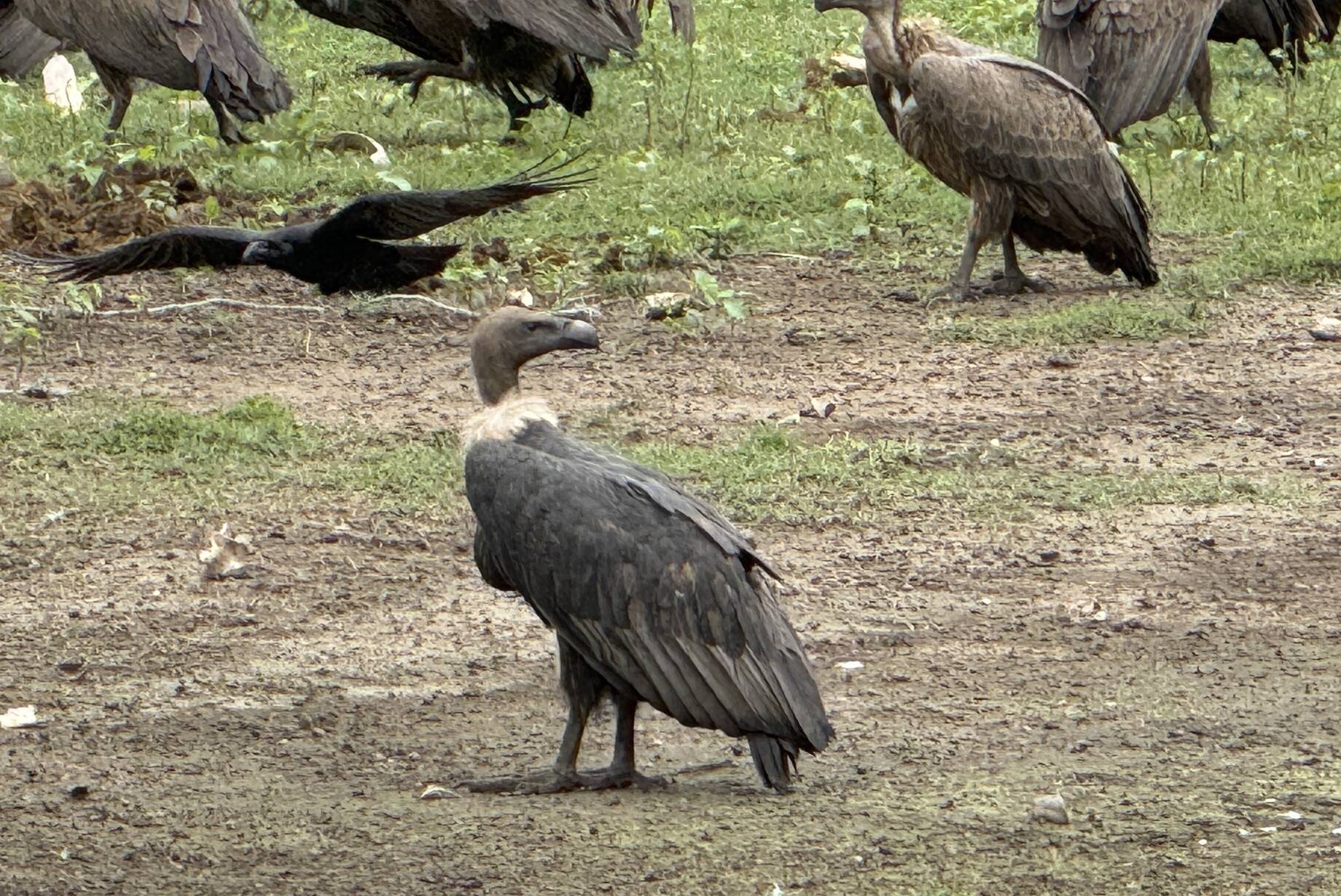
In 1985 the White-rumped Vulture was described as possibly the most abundant large bird of prey in the world. Villagers in northern India first noticed vultures disappearing in 1996–97, and by 2000 road surveys showed declines of more than 90%. The cause was a mystery until 2004, when Oaks and colleagues showed that birds dying in Pakistan had visceral gout and residues of diclofenac, a cheap anti-inflammatory given to sick cattle.
Governments in India, Nepal and Pakistan banned veterinary diclofenac in 2006. Since then the rate of decline has slowed and may have reversed locally, and captive-bred birds have been released into diclofenac-free Vulture Safe Zones. The species remains Critically Endangered, and the story is now used worldwide to argue for safety-testing veterinary drugs on scavengers.
What helped
India, Nepal and Pakistan banned veterinary diclofenac in 2006; Bangladesh followed in 2010.
India banned large multi-dose vials of diclofenac in 2015 to curb illegal veterinary use.
The SAVE (Saving Asia’s Vultures from Extinction) consortium was formed in 2011.
Vulture Safe Zones of about 100 km radius around colonies and release sites; Nepal declared the first fully diclofenac-free zone in 2021.
Challenges that remain
Veterinary diclofenac · Other vulture-toxic veterinary drugs · Food shortage and poisoning in South-East Asia
Photo: U.S. Fish and Wildlife Service Headquarters · CC BY 4.0 · Source · Resized and recompressed
16
Whooping Crane
ENEndangered · 2020
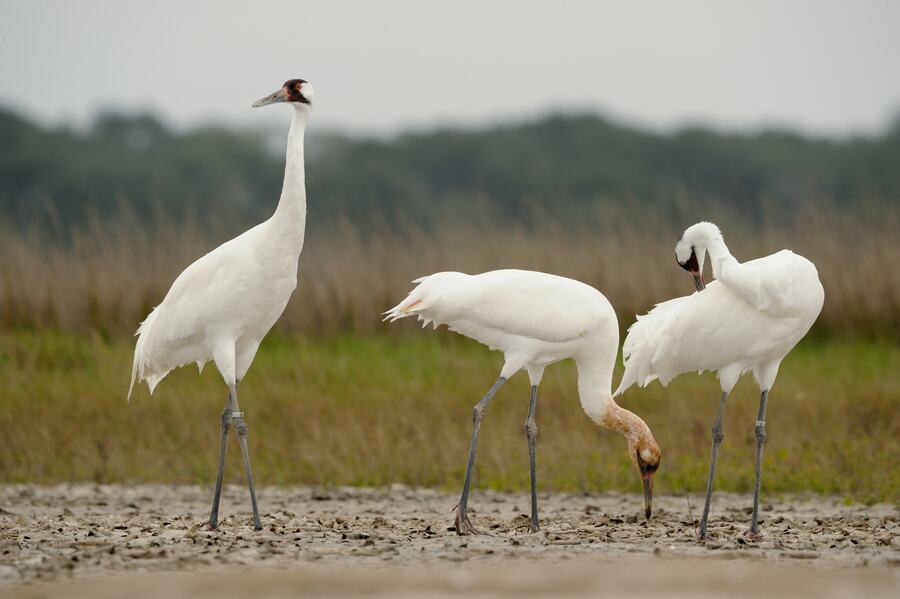
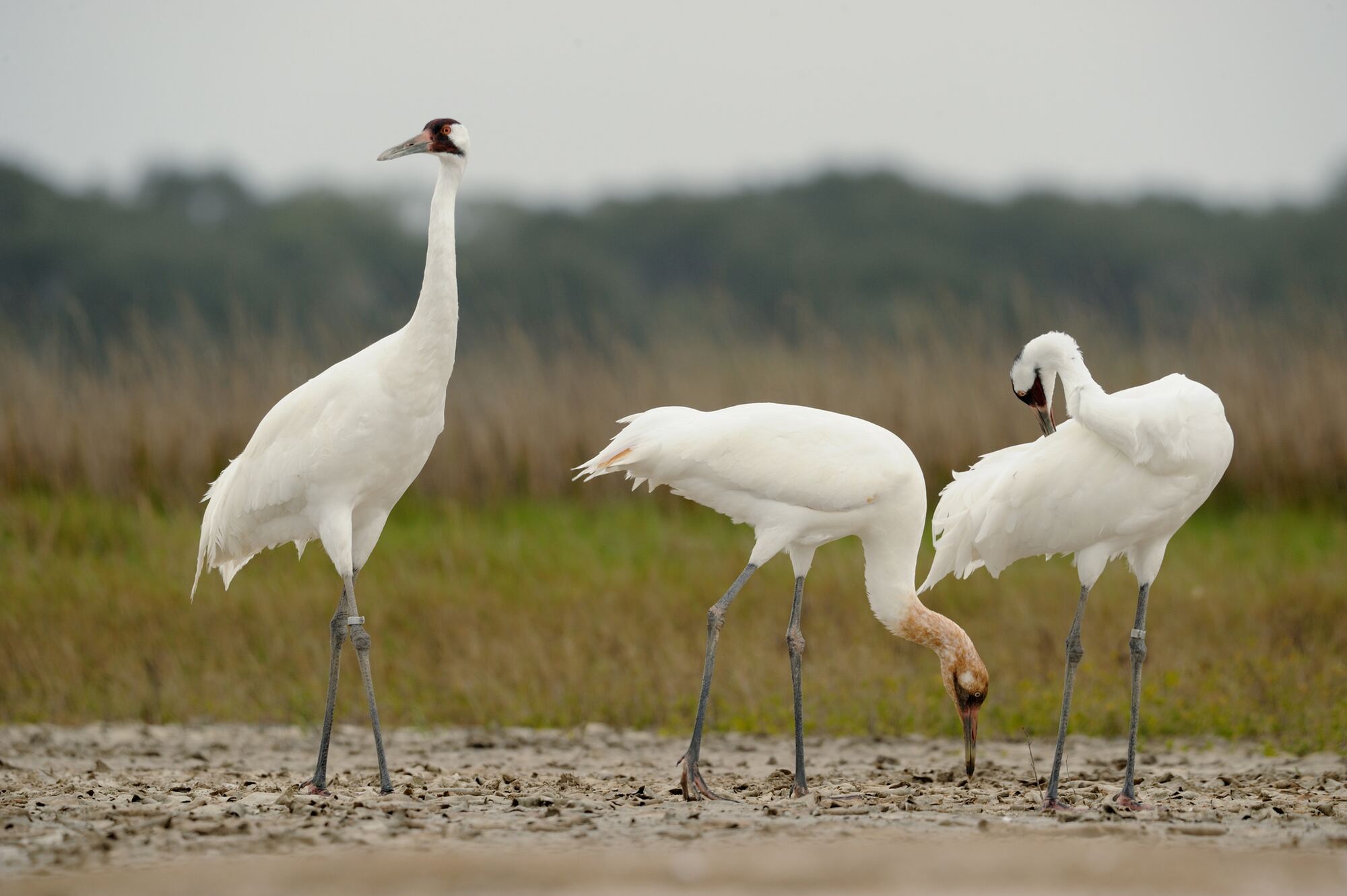
Before European settlement there may have been more than 10,000 whooping cranes; by about 1870 there were perhaps 1,300–1,400. Hunting and the conversion of prairie wetlands to farmland drove them close to extinction, and by winter 1941–42 the migratory flock wintering in Texas numbered just 15 or 16 birds. Protection of the wintering grounds at Aransas, legal protection and protection of the Wood Buffalo nesting grounds allowed this flock to grow at about 4% a year, reaching more than 500 birds by the late 2010s.
Reintroductions have had mixed results. A Rocky Mountain flock established in the 1970s had died out by 2002–03. A non-migratory Florida flock suffered poor breeding and high mortality and was discontinued in 2007. An eastern migratory flock, whose first birds learned their route by following ultralight aircraft, reached about 100 birds but has struggled to raise young, partly because black flies drive birds off their nests. A non-migratory Louisiana flock was started in 2011.
The Aransas–Wood Buffalo flock remains the only self-sustaining population, which puts all its birds at risk from a single hurricane, spill or disease event on the Texas coast. Its growth has slowed since about 2015, and the cranes are now spreading into new, less protected areas where they meet power lines, development and other hazards.
What helped
Protection of the wintering grounds at Aransas National Wildlife Refuge and the breeding grounds in Wood Buffalo National Park.
Listing under the US Endangered Species Act (1967) and Canadian legislation; CITES Appendix I.
Captive breeding from eggs taken from wild nests, supporting reintroduced flocks in Florida, the eastern USA and Louisiana.
Annual aerial winter surveys by USFWS, with marking and tracking of birds.
Challenges that remain
Power-line collisions · Energy development in the migration corridor · Drought and freshwater inflows · Coastal development and sea-level rise · Low genetic diversity